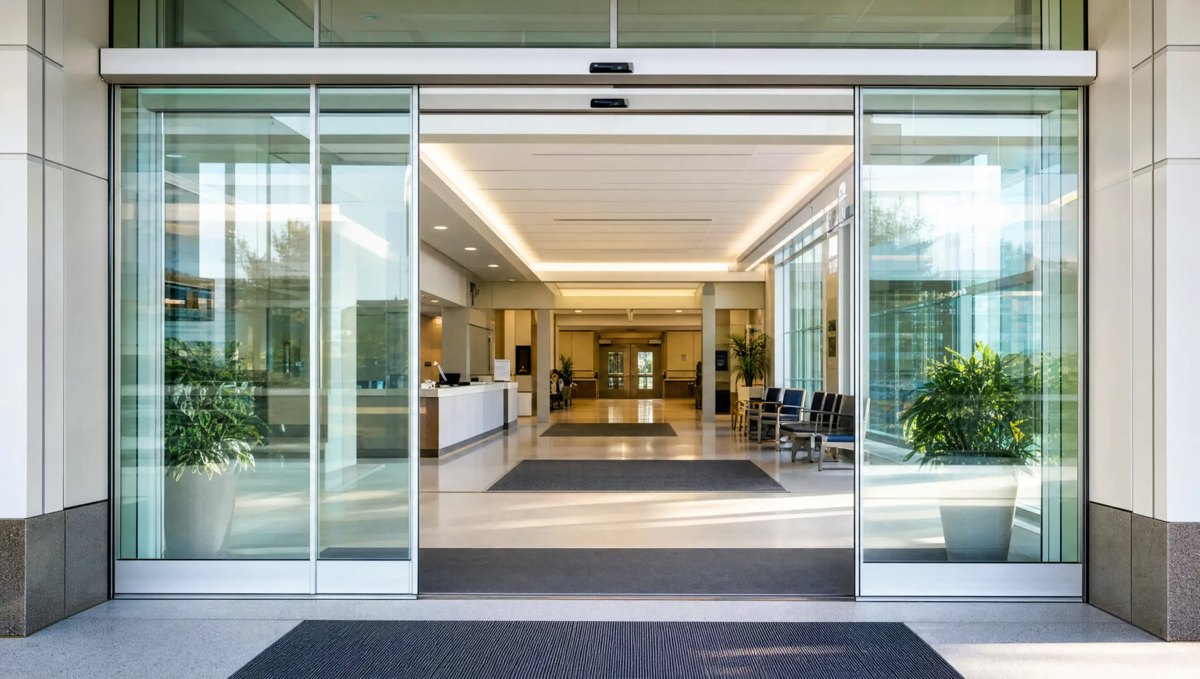
Veterinary clinics deal with a kind of foot traffic most businesses never see: clients carrying cat carriers with both arms, wrangling leashed dogs that don't want to go inside, or pushing a gurney out to a waiting vehicle. A standard swing door that requires a free hand to pull open just doesn't work for this crowd. An automatic door designed and maintained correctly for your clinic's layout makes every one of those moments easier, for clients and staff alike.
Hands-Full Entry Is the Norm, Not the Exception
Think about how often someone approaches your front door holding a carrier, a leash, paperwork, or all three at once. Automatic sliding or swinging doors remove the need to free up a hand, which matters for:
- Clients carrying carriers with cats, rabbits, or small animals
- Owners managing a large or anxious dog on a leash
- Staff moving supplies, carts, or equipment between the lobby and the parking lot
- Clients exiting quickly during an emergency drop-off
A door that opens on approach keeps the flow moving and reduces the awkward shuffle of trying to balance a carrier while tugging a door handle.
Low-Mounted Pets and Sensor Coverage
Motion and presence sensors on automatic doors are positioned and configured to detect people walking through at standard height and pace. A small dog or cat at floor level moving ahead of its owner, or a client who pauses just inside the sensor zone, presents a different detection challenge than the sensors were originally tuned for. Getting sensor placement and sensitivity right for a space with low-to-the-ground traffic is a job for a certified AAADM technician with the right testing equipment, not a matter of general settings. If you've noticed a door that seems slow to react to pets or closes before a leash is fully clear, that's worth a service call rather than a guess-and-check adjustment.
Cleaning Chemicals and Door Tracks
Veterinary clinics clean constantly, and that means disinfectants, deodorizers, and sometimes bleach-based products end up near floor tracks and door thresholds on a daily basis. Residue and moisture in the track area can affect how smoothly a sliding door operates over time, and harsh chemicals can degrade seals, gaskets, and sensor housings faster than in a typical retail space. A few practical habits help:
- Keep cleaning crews informed about which areas near the door are sensitive to standing liquid
- Wipe down track covers rather than letting cleaner pool and seep underneath
- Flag any buildup, grinding noise, or sticking to your service provider before it becomes a bigger repair
Routine inspection and cleaning by a technician familiar with automatic door hardware helps catch chemical-related wear before it leads to a breakdown.
Separating Lobby Traffic From Treatment Areas
Front-entrance traffic is only half the picture. Many clinics also need a clear boundary between the public lobby and treatment, surgery, or boarding areas, both for a calmer patient experience and to keep an escaped cat or startled dog from making it to the parking lot. An interior automatic door, or an access-controlled door at the treatment area entrance, can:
- Keep nervous or reactive animals contained to the areas they need to be in
- Reduce noise and stress carried from the lobby into exam rooms
- Let staff move carts and patients through hands-free
- Be paired with access control so only staff can open it, while clients use the main entrance
This kind of layout works best when it's planned around how your staff actually moves through the building during a busy day, not just where a door happens to fit.
Keep It Running the Way It Was Designed To
Automatic doors in a clinic setting see more daily cycles, more unpredictable traffic, and tougher cleaning conditions than a typical office entrance. Force, timing, and sensor adjustments are safety-critical and should always be handled by a certified AAADM technician using proper testing equipment, never adjusted on the fly by staff. Scheduled inspections catch wear from chemical exposure, animal traffic, and heavy daily use before they turn into a door that won't open, or won't close, when you need it to.
CSC Automatic Doors has served central Arkansas businesses since 1976, including clinics across Conway, Little Rock, North Little Rock, Benton, Bryant, Maumelle, Jacksonville, Searcy, Russellville, Cabot, Sherwood, and Hot Springs. If your veterinary clinic needs a new automatic entrance, an interior traffic solution, or service on an existing door, call CSC at 501-548-2374.
Frequently asked questions
Can an automatic door be adjusted to detect cats and small dogs better?
Sensor placement and sensitivity can be configured for different traffic patterns, but that kind of adjustment is safety-critical and should be handled by a certified AAADM technician with proper testing equipment rather than attempted in-house.
Do cleaning chemicals used in a veterinary clinic damage automatic door parts?
Disinfectants and strong cleaners near door tracks and thresholds can affect seals and moving parts over time. Keeping liquids from pooling at the base of the door and scheduling regular inspections helps catch wear early.
Can we add an automatic door between our lobby and treatment area?
Yes, an interior automatic or access-controlled door can separate public and clinical spaces, helping contain animals and reduce noise. The best setup depends on your clinic's layout and daily workflow, which CSC can assess on-site.