A Different Kind of Entrance Traffic
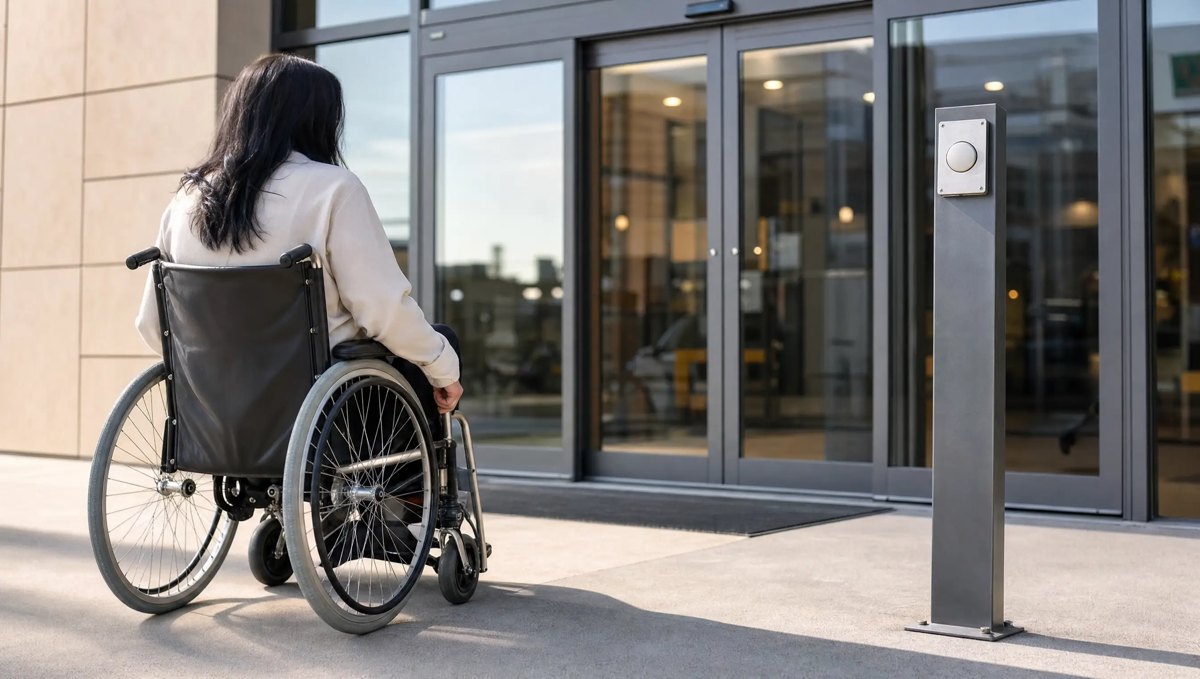
A grocery store entrance sees fast walkers, kids, and shopping carts. A senior living or memory care entrance sees something else entirely: residents using walkers, wheelchairs, canes, and scooters, often moving slowly and sometimes hesitating mid-doorway. Staff push wheelchairs through with both hands occupied. Visitors carry bags and hold a resident's arm at the same time. For facilities across Little Rock, Conway, North Little Rock, Benton, Bryant, Maumelle, Jacksonville, Searcy, Russellville, Cabot, Sherwood, and Hot Springs, the automatic door at the front entrance isn't just convenience — it's one of the pieces of equipment residents and families trust every single day.
Gentle Timing for Walkers, Wheelchairs, and Slower Steps
An automatic door set up for a typical retail storefront is tuned for quick, steady foot traffic. In a senior living community, that same timing can feel rushed or even startling. A door that opens fast and closes quickly can catch a resident still working their walker through the opening, or close before a wheelchair has fully cleared the threshold.
Senior living entrances generally need:
- Longer hold-open times so a slower resident isn't rushed
- Smoother, less abrupt opening and closing motion
- Sensor coverage that reliably picks up a wheelchair, walker, or scooter moving at a crawl, not just an adult walking at a normal pace
- Low-energy or push-plate activation options where a gentler, more predictable motion is appropriate
These are safety-critical settings, and they belong to a certified AAADM technician with the right testing equipment — not a maintenance team adjusting a dial by feel. Getting the timing right takes measurement against the manufacturer's limits, not guesswork.
Memory Care Needs a Secure Perimeter, Not Just an Open Door
Memory care adds another layer entirely. The entrance has to welcome staff, families, and deliveries while keeping residents who may wander from leaving unsupervised. That means the automatic door is doing two jobs at once: staying accessible for people who need it to open easily, and staying secure against residents who shouldn't be able to walk out on their own.
That balance usually involves coordinating the automatic operator with access control — card readers, keypads, delayed egress hardware, or staff-operated overrides — so the door behaves differently depending on who's approaching it. A door that opens for a staff badge but not for a resident walking up alone, or one that includes a brief delay paired with an alarm, is a very different system than a standard public entrance. This kind of setup has to be planned and wired correctly from the start, and it has to keep working correctly for years, through every software update, power blip, and battery replacement.
Why These Doors Deserve Your Most Careful Annual Check
Every automatic door in your portfolio should get a thorough annual inspection. Senior living and memory care entrances deserve the most careful one you schedule all year, for a simple reason: the people walking through them are the least able to get out of the way if something goes wrong, and the consequences of a security gap are higher than almost anywhere else in your building.
A sensor that's drifted out of alignment, a closing speed that's crept up over months of use, or a door that's holding open a half-second too short can go unnoticed on a healthy adult but matters enormously to a resident with a walker. A delayed-egress door that isn't latching the way it should, or an access-control integration that's quietly stopped talking to the operator, is exactly the kind of fault that only shows up during a real inspection — not during everyday staff observation.
That's why we recommend treating these entrances as the priority stop on your annual inspection, not an afterthought bundled in with the rest of the property.
What CSC Looks At During a Senior Living Visit
- Opening and closing speed, and whether hold-open time still gives slower residents enough margin
- Sensor detection at wheelchair, walker, and scooter height, not just standing-adult height
- Closing force against the manufacturer's limits, with proper testing equipment
- How the operator and any access control, delayed egress, or alarm hardware are working together
- Battery backup and operation during a power interruption
- General wear on weatherstripping, tracks, and hardware that can affect how smoothly the door moves
We're AAADM-certified, licensed, and insured, and we service entrances for facility, healthcare, retail, and hospitality clients throughout central Arkansas — we understand that a senior living front door isn't the same job as a storefront.
If it's been a while since your senior living or memory care entrance had a real inspection, or if you're planning a new entrance and want it set up right from day one, call CSC Automatic Doors at 501-548-2374. We'll walk your entrance with you and tell you plainly what it needs.
Frequently asked questions
How is a senior living entrance different from a typical retail automatic door?
Retail entrances are tuned for quick, steady foot traffic. Senior living entrances need longer hold-open times, gentler motion, and sensors that reliably detect wheelchairs, walkers, and scooters moving much slower than a typical adult. These are safety-critical settings that a certified AAADM technician adjusts with proper testing equipment.
Can a memory care entrance stay accessible and still keep residents from wandering out?
Yes, but it takes more than just an automatic door — it usually means coordinating the operator with access control such as card readers, keypads, or delayed egress hardware so the door behaves differently for staff than it does for an unsupervised resident. This kind of system needs to be planned and installed correctly from the start.
How often should a senior living facility have its automatic doors inspected?
At minimum, once a year, and we recommend treating senior living and memory care entrances as the priority stop on that visit rather than an afterthought. Call 501-548-2374 to schedule an inspection for your community.