Why Arkansas Storm Season Is Rough on Door Electronics
Central Arkansas gets hammered by spring and summer thunderstorms, and businesses from Conway to Little Rock to Hot Springs feel it in more than just rained-out parking lots. Lightning doesn't have to strike your building directly to cause damage. A nearby strike on a power line, a transformer, or even a tree can send a voltage spike racing through the electrical service and into every piece of equipment plugged into it — including the control board that runs your automatic entrance.
Automatic door operators sit right at the edge of a building's electrical system, often wired close to HVAC units, exterior lighting, and other equipment that draws power from the same circuits. That makes the control board a convenient path for a surge to travel once it's inside the building. Add in the fact that many commercial properties in our area run older electrical panels without much surge protection, and you've got a recipe for repeat damage every storm season.
What Surge Damage Looks Like at the Door
A fried control board doesn't always announce itself with a dead door. Sometimes the symptoms are subtle, and business owners write them off as "the door's just acting weird" for weeks before the unit fails completely. Watch for:
- A door that opens or closes erratically, or hesitates for no clear reason
- Sensors that seem to ignore people standing in the detection zone, or that trigger when no one is there
- A door that won't respond to a push plate or card reader at all
- Status lights on the operator housing that are off, blinking in a pattern you've never seen, or stuck solid
- A door that worked fine before a storm and started misbehaving right after
- Breakers that trip repeatedly when the door operator cycles
Any one of these can point to something else entirely, but a sudden change right after a thunderstorm rolling through Searcy, Russellville, or anywhere in between is a strong clue that a surge reached the board.
Protecting the Circuit Before the Next Storm
You can't stop lightning from striking near your building, but you can reduce how much of that energy reaches your door operator. A few practical steps worth discussing with your electrician or facility team:
- Point-of-use surge protection installed on the circuit feeding the door operator, in addition to whole-building protection at the main panel
- Keeping door operator wiring separate from circuits that power heavy equipment prone to its own electrical noise
- Scheduling a seasonal check before storm season ramps up, so a technician can look at wiring connections, grounding, and the condition of existing surge protection
- Having a plan for what to do with the door — including setting it to a safe mode — if you lose power or see erratic behavior during a storm
None of this guarantees a board will survive every strike, but it meaningfully lowers the odds and often limits the damage to something repairable rather than a full board replacement.
Why Diagnosis Belongs to a Trained Technician
Once a storm has passed and a door is acting up, resist the urge to start swapping wires or resetting settings yourself. A control board governs safety-critical functions — how fast the door moves, how it responds to sensors, how much force it applies — and guessing your way through a fix can leave a door operating outside the manufacturer's limits without any obvious sign that it's happened.
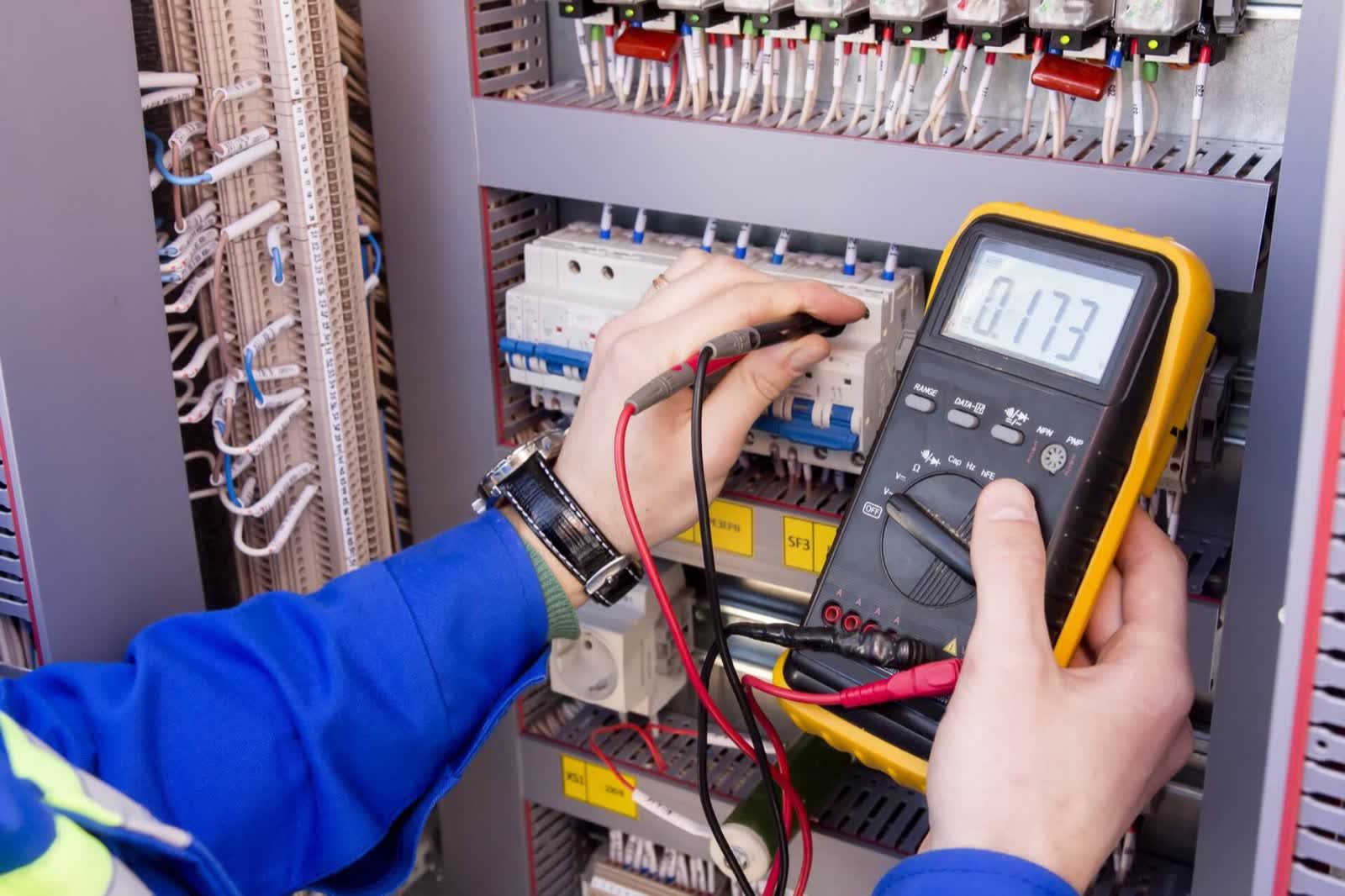
A trained technician brings testing equipment that can tell the difference between a board that's fully fried, one with a single damaged component, and a wiring or sensor issue that only looks like a board failure. That distinction matters for your budget and for how quickly your entrance gets back to normal. It also matters for the people walking through that door every day, since a board that's partially damaged but still "working" can behave unpredictably at the worst possible moment.
At CSC Automatic Doors, our AAADM-certified technicians diagnose storm and surge damage on commercial automatic entrances throughout Conway, Little Rock, North Little Rock, Benton, Bryant, Maumelle, Jacksonville, Searcy, Russellville, Cabot, Sherwood, and Hot Springs. We've been part of the Commercial Service Company family serving central Arkansas businesses since 1976, and we know this region's storm patterns as well as we know door hardware.
If your automatic door started acting strange after the last round of thunderstorms, don't wait for it to fail completely. Give us a call at 501-548-2374 and we'll get a technician out to check the board, the wiring, and the surge protection on that circuit.
Frequently asked questions
Can a power outage alone damage an automatic door control board, or does it take a direct lightning strike?
A direct strike isn't necessary. A voltage spike traveling through the power grid from a nearby strike, or even sudden power restoration after an outage, can send enough of a surge through building wiring to damage a control board.
If the door still opens and closes, is it safe to assume the board is fine?
No. A partially damaged board can keep a door moving while sensor response, timing, or force settings drift outside the manufacturer's limits. A door that still functions isn't the same as a door that's functioning correctly, which is why a technician's inspection matters even when the door seems to work.
How quickly after a storm should we get the door checked?
As soon as you notice any change in how the door behaves — hesitation, odd sensor response, flickering status lights, or breaker trips. Waiting often turns a repairable board issue into a full failure, and in the meantime the door may not be responding reliably to the people using it.