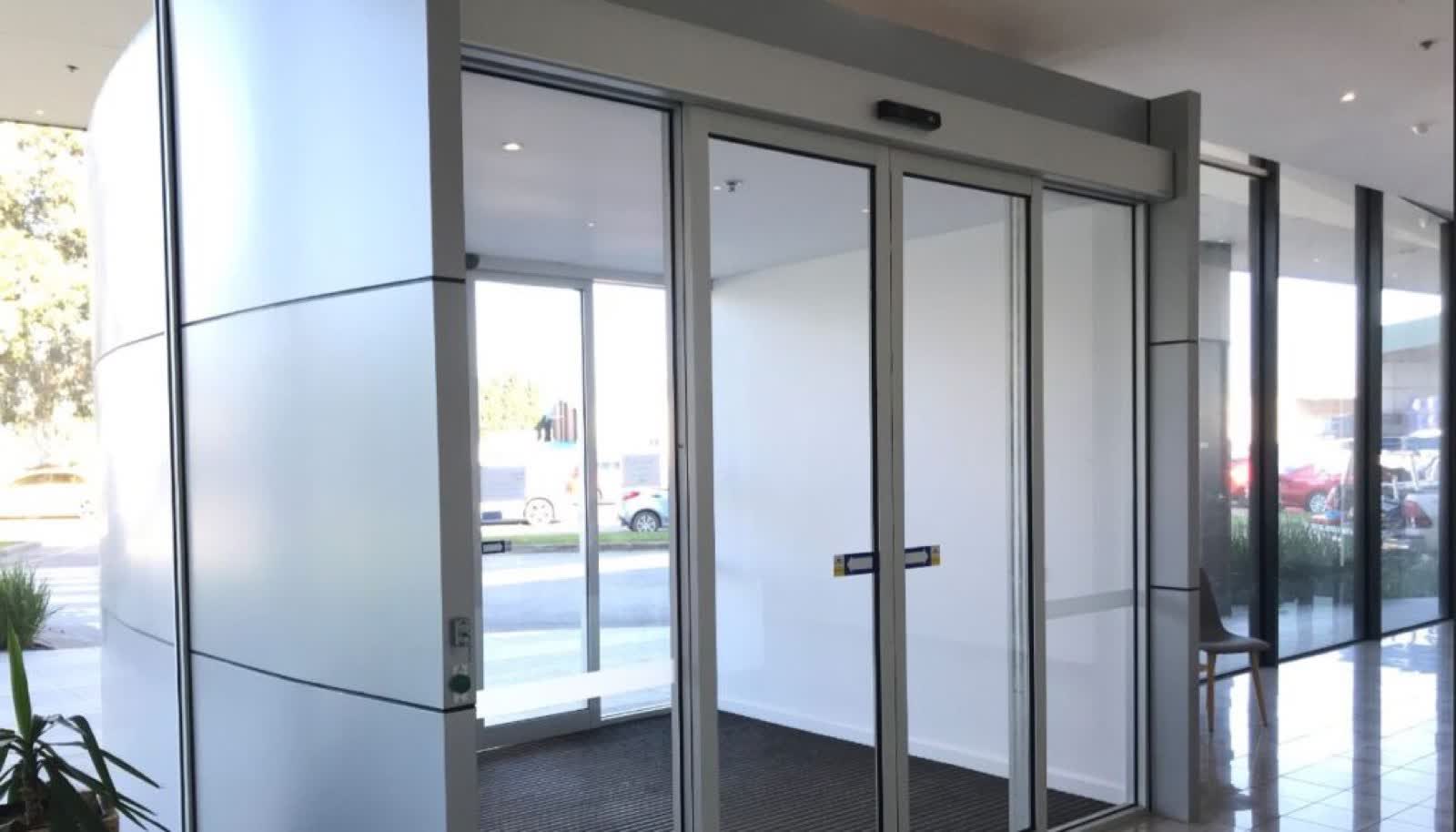
Walk into almost any manufacturing plant in central Arkansas and you'll find a handful of doors that take more abuse than anything else on the property: the personnel doors between the production floor and the office or break room side of the building. These doors separate two very different environments, and they get hit by traffic patterns most other commercial doors never see.
Production-to-Office Traffic Is a Different Animal
An automatic door at a retail entrance sees a steady trickle of people all day. A personnel door inside a plant sees something very different: long stretches of light use, followed by a flood of workers moving between the floor and the office, break room, or locker area all at once. That uneven load matters when you're choosing a door operator and setting up the controls, because a door sized for occasional use will wear out faster when it's suddenly asked to cycle dozens of times in a few minutes.
Hands-Full Workers Need Hands-Free Doors
Plant employees moving between areas are often carrying parts, tools, paperwork, or pushing a cart — rarely do they have a free hand for a door. That's exactly the kind of traffic automatic doors are built for, but it also means the activation method matters. Push plates, motion sensors, or wave-to-open sensors should be placed where someone with full arms can still trigger the door without juggling what they're carrying or backing into it. If your plant has added new workstations, moved a line, or shifted where carts travel, it's worth having a technician take a look at whether the current sensor placement still matches how people actually move through that doorway.
Dust and Vibration Are Hard on Sensors and Boards
Production floors generate airborne dust, metal fines, and vibration from machinery — none of which are friendly to the electronics that make an automatic door work. Dust can settle on sensor lenses and reduce how well they detect people and objects. Vibration from nearby equipment or forklift traffic can gradually loosen connections on control boards and wiring over time. These doors need more frequent attention than a typical office entrance, including regular cleaning of sensor eyes and a periodic check of the internal components by someone qualified to do it. A door that seems to be working fine can still have a sensor that's reading inconsistently under a film of dust — and in a safety-critical application like a personnel door, that's not something to guess about.
Shift Changes Push Cycle Counts Way Up
Nothing stresses a personnel door operator like a shift change. In the span of a few minutes, a door that might see light use the rest of the day suddenly cycles over and over as workers clock out and the next shift clocks in. That kind of concentrated, repeated use accelerates wear on belts, rollers, and the operator motor itself. Plants running multiple shifts should expect these doors to need maintenance on a shorter interval than a single-shift facility, simply because the duty cycle is so much higher during those surge windows.
Why This Matters for Uptime
When a personnel door between production and office space goes down, it's not just an inconvenience — it can bottleneck how workers move through the building, especially right at shift change. Planning maintenance around your plant's actual traffic patterns, rather than a generic schedule, helps catch wear before it turns into a door that won't open during a shift surge.
Leave the Adjustments to a Certified Technician
Force settings, timing, and sensor calibration on these doors are safety-critical, especially given the heavier and more varied traffic a plant personnel door sees. Those adjustments belong to a certified AAADM technician with the right testing equipment — not a maintenance team DIY fix, even when the issue looks simple. Our technicians are trained to test and adjust automatic doors to the manufacturer's limits and can spot early signs of dust or vibration damage before they cause a failure.
If your central Arkansas plant has personnel doors that need a closer look, routine maintenance, or a repair, give CSC Automatic Doors a call at 501-548-2374. We serve manufacturing facilities across Little Rock, Conway, North Little Rock, Benton, Bryant, Maumelle, Jacksonville, Searcy, Russellville, Cabot, Sherwood, and Hot Springs.
Frequently asked questions
How often should personnel doors in a manufacturing plant be serviced?
It depends on shift count and how dusty the environment is, but plants running multiple shifts or heavy production dust typically need more frequent checks than a single-shift, cleaner facility. A technician can recommend an interval based on your actual traffic and conditions.
Can dust buildup cause an automatic door to stop working correctly?
Yes. Dust and debris can settle on sensor lenses and reduce how reliably they detect people, and vibration from nearby equipment can loosen internal connections over time. Regular cleaning and inspection by a qualified technician helps catch this before it causes a failure.
What activation option works best for workers carrying parts or tools?
Motion sensors or wave-to-open sensors placed at the right height and distance generally work well for hands-full traffic, since workers don't need to set anything down to trigger the door. A technician can evaluate your doorway and traffic flow to recommend the best placement.