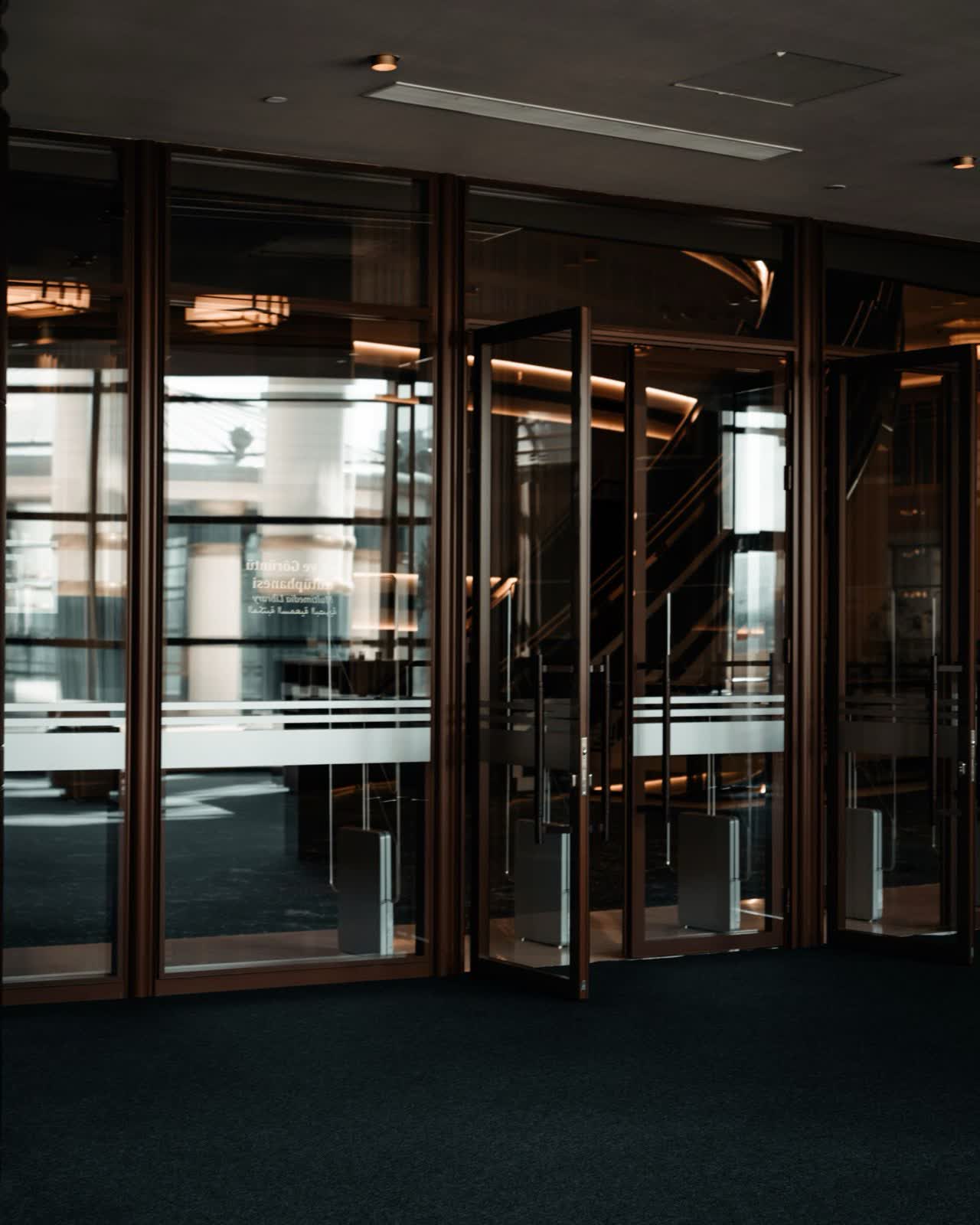
When an automatic entrance quits, the first call is to a technician and the second call is usually an argument over the bill. In a leased building, who pays for automatic door repair is decided by the lease language, not by who was standing at the door when it failed. Here is how commercial leases normally split entrance-door repair and inspection duty, what to check before a surprise invoice lands, and how to set up service either way.
The Lease Decides, Not the Door
An automatic entrance sits in an awkward spot. The frame and glass are part of the building shell, which a landlord usually keeps. The operator, sensors, activation devices, and controls are equipment a tenant runs hundreds of times a day, and equipment usually falls to the tenant. Most commercial leases settle that split in one of a few ways.
- Triple net: the tenant typically carries maintenance and repair on the storefront and its entrance, operator and sensors included.
- Full service or gross: the landlord typically maintains the building envelope and shared entrances, then recovers the cost through operating expenses.
- Modified gross: the duty is split, commonly landlord for structure, frame, and glass, and tenant for the operator, sensors, and routine service.
- Common area: in a multi-tenant center, a shared vestibule or lobby entrance is often common area, so it is billed across all tenants rather than to the one closest to it.
Where the Surprise Invoices Come From
Most disputes are not about the entrance itself. They are about which bucket the work falls into.
- Repair versus replacement. Many leases put routine repair on the tenant and capital replacement on the landlord. A twenty-year-old operator that finally stops holding an adjustment can be argued both ways.
- Wear versus damage. A slide door that drifts out of adjustment over years is wear. A door struck by a pallet jack, a cart, or a vehicle is damage, and damage clauses usually follow whoever caused it.
- Service versus inspection. Plenty of leases say nothing about an annual safety inspection on an automatic entrance, which means nobody has scheduled one. That gap shows up later as an emergency call.
- After-hours labor. Some leases reimburse the repair itself but not the premium for a night, weekend, or holiday call.
What to Check Before You Approve a Bill
- Pull the maintenance and repair section of the lease, plus any exhibit listing building systems, and see whether entrance doors or door operators are named at all.
- Look for a dollar threshold. Tenant pays up to a set amount per occurrence and landlord pays above it is a common structure.
- Check the site plan and confirm whether the entrance is inside your leased space or sits in common area.
- Check whether the equipment was already there when you moved in or you installed it. Tenant-installed equipment is almost always tenant-maintained.
- Ask for the technician's written findings. A report that separates the failed part, the labor, and any safety findings makes the conversation with a property manager very short.
Set Up Service So the Door Is Not Waiting on the Argument
The worst outcome is a propped-open or barricaded entrance while two parties trade emails. Whichever side you are on, do this before the next failure:
- Put one service company on the entrance and give us both the landlord and the tenant contact, so the call goes out no matter who notices the problem first.
- Get planned maintenance in writing with a set visit schedule, so inspection duty stops being an open question.
- Keep the equipment record: manufacturer, model, install year, and every past repair. Nothing settles the repair-versus-replacement question faster.
- Agree in advance on an amount a manager can approve on the spot without a second signature.
What Belongs to a Certified Technician
No matter who ends up paying, an automatic entrance is not a do-it-yourself repair. Opening force, closing speed, hold-open time, sensor patterns, and the presence-detection zone are safety-critical settings that have to be measured with the right testing equipment and set inside the manufacturer's limits. That work belongs to an AAADM-certified technician. What a tenant can safely handle: keep sensor lenses and the threshold clean, keep mats flat and out of the sensor view, keep guide rails clear of debris, keep decals and signage in place, and write down exactly what the door does and when, so the technician is not chasing an intermittent fault blind.
CSC Automatic Doors has served central Arkansas businesses since 1976, from Conway and Little Rock to North Little Rock, Benton, Bryant, Maumelle, Searcy, Cabot, Russellville, and Hot Springs. Whether you are a tenant with an entrance you did not install or a landlord with doors across several buildings, call 501-548-2374 and we will get the entrance working and leave you a written report you can hand straight to the other party.
Frequently asked questions
My lease says the landlord maintains the building. Does that cover the automatic door?
Not always. Building-shell language often covers the frame, glass, and structure while the operator, sensors, and controls are treated as equipment inside your space. Read the maintenance section together with any exhibit that lists building systems, and check the site plan to see whether the entrance is inside your leased area or in common area.
Who is supposed to schedule the annual safety inspection on an automatic entrance?
Whoever the lease assigns maintenance to, and if the lease is silent, it usually falls to the party who calls it in. The practical fix is to put the entrance on a planned maintenance schedule with one service company and share that schedule with both landlord and tenant so it never gets skipped.
Can I adjust the door speed or hold-open time myself while we sort out who pays?
No. Force, speed, hold-open time, and sensor coverage are safety-critical settings that have to be measured with proper testing equipment and set within the manufacturer's limits by an AAADM-certified technician. Keep the sensors and threshold clean, note the symptoms, and call for service at 501-548-2374.