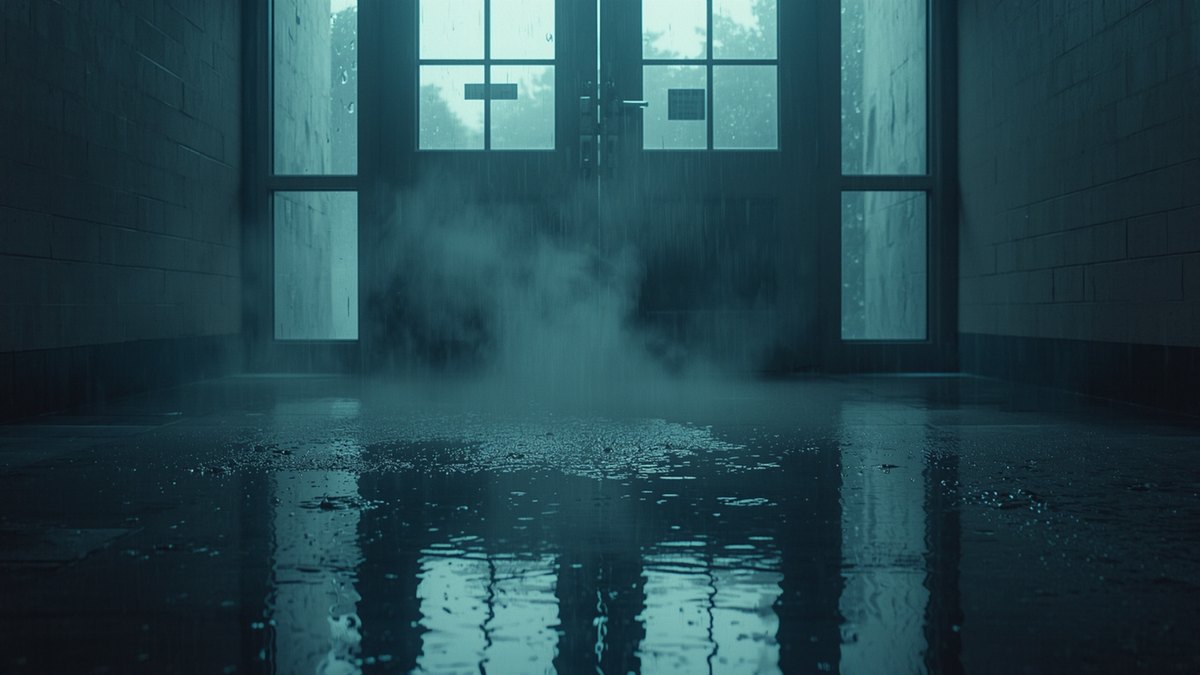
Central Arkansas summers bring thick, sticky humidity, and nowhere does it show up faster than at your automatic entrance. The moment that warm, moist outside air meets the cooler air conditioning blowing out of your lobby, condensation forms right where you need clear sensors, dry floors, and smooth-running hardware the most. Facility managers in Little Rock, Conway, North Little Rock, Benton, Bryant, Maumelle, Jacksonville, Searcy, Russellville, Cabot, Sherwood, and Hot Springs see this same pattern every year once the temperature and dew point both climb.
Fogged Sensor Lenses and Glass
Automatic doors rely on sensors to know when someone is approaching and when it is safe to close. When condensation beads up on a sensor lens or on the glass itself, the sensor can read the moisture as an obstruction, misjudge distance, or simply struggle to see clearly. Guests notice a door that hesitates, opens late, or acts unpredictably — and on a humid July afternoon, that is often exactly what is happening behind the glass.
- Fogged glass at the header or threshold sensor location
- Doors that open a beat late for approaching customers
- Inconsistent detection that seems to come and go with the weather
A quick exterior wipe-down of glass is fine housekeeping, but sensor alignment and sensitivity are safety-critical settings. Adjustments belong to an AAADM-certified technician with the right testing equipment, not a guess-and-check approach from staff.
Water Pooling Inside the Entrance
Condensation does not stay on the glass. As humid air hits the cooler frame, track, and floor near the entrance, moisture can collect and drip, leaving standing water right inside the door — sometimes well before anyone sees rain outside. On busy entrances with heavy foot traffic, that pooled water gets tracked further into the lobby, turning a small condensation issue into a building-wide housekeeping headache.
Mats, fans, and a watchful eye help in the short term, but if pooling shows up at the same spot every humid week, that is a sign the entrance needs a closer look rather than another mop pass.
Corrosion on Hardware and Tracks
Repeated condensation cycles — wet, dry, wet again — are hard on metal. Over a season or two, moisture that sits in the track, around fasteners, or inside the header can lead to corrosion, pitting, or a sticky, rough-running track. Hardware that is starting to corrode often shows warning signs well before it fails outright:
- Rust-colored streaks at the threshold or track
- Grinding, squeaking, or uneven motion as the door cycles
- Fasteners or brackets that look discolored or pitted
Catching corrosion early is far less costly than replacing a track or operator component later. This is another area where a trained eye during a maintenance visit pays off — hardware condition is easy to miss during a normal business day but obvious to a technician who knows what to look for.
The Slip Risk Starts at the Front Door
Of everything humidity causes at an automatic entrance, the slip risk deserves the most attention. Condensation and tracked-in moisture make the floor just inside the door slick, and that is also the exact spot where people are walking fastest, carrying bags, pushing carts, or managing kids — not watching their feet. Retail stores, healthcare lobbies, and hospitality entrances all share this same first-impression risk zone.
Mats, warning signage, and prompt mopping are the frontline defense your staff can control day to day. But if water is consistently appearing at your entrance during humid stretches, the better long-term fix is addressing why the condensation is forming there in the first place — door sealing, sensor performance, and airflow at the entrance all play a role.
What a Maintenance Visit Checks
A seasonal check from CSC looks at the things that matter most once humidity climbs: sensor lenses and calibration, glass and frame condition, hardware and track wear, and how the entrance is handling moisture overall. Addressing these before peak summer humidity hits helps keep your entrance opening smoothly, your floors safer, and your hardware lasting longer.
If your entrance is fogging up, pooling water, or just not running the way it used to once the humidity rolls in, give CSC Automatic Doors a call at 501-514-4932. We serve facility, retail, healthcare, and hospitality locations across central Arkansas and can get a technician out to take a look.
Frequently asked questions
Can we just wipe the fog off our sensor lenses ourselves?
Wiping condensation off the outside of the glass is fine routine upkeep, but the sensor's alignment and sensitivity are safety-critical settings. Those adjustments should be left to an AAADM-certified technician with proper testing equipment rather than handled by on-site staff.
Why does our automatic door only act strange in the summer?
Humidity is usually the culprit. When warm, moist outside air meets cooler indoor air at the entrance, condensation forms on glass, sensors, and metal components, which can affect detection, cause pooling water, and leave hardware exposed to repeated moisture cycles.
How often should an automatic entrance be checked in a humid climate?
A seasonal check before and during the heaviest humidity months is a good practice for most central Arkansas buildings. Regular visits catch fogged sensors, early corrosion, and moisture issues before they turn into bigger repairs or a safety concern at the entrance.