If your building has automatic sliding, swinging, or revolving doors, they carry real safety and liability weight every time they cycle. A door that opens too fast, closes on a customer, or fails to detect someone in its path is a hazard—and in most cases, a preventable one. The question we hear most from facility managers across central Arkansas is simple: how often should automatic doors actually be inspected?
The Annual Standard: AAADM Inspections
The American Association of Automatic Door Manufacturers (AAADM) recommends that every automatic pedestrian door receive a full safety inspection at least once a year, performed by a certified inspector. This is the benchmark most manufacturers, insurers, and safety-minded facility owners follow.
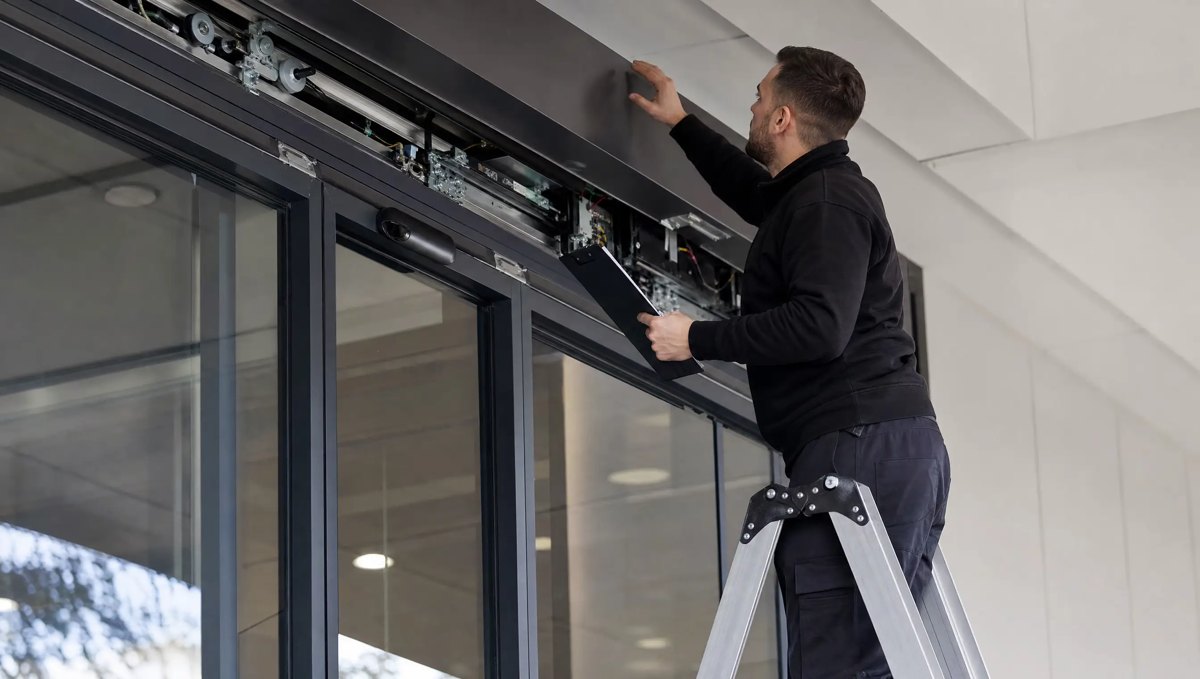
An annual AAADM inspection is thorough. A certified technician checks the door's opening and closing speeds, hold-open time, and the force it exerts. They test the sensors and safety beams that are supposed to detect a person in the doorway, confirm signage is present and correct, and verify the door meets the applicable industry standards for its type. These are measurements and adjustments that require training and calibrated tools—not something an untrained staff member should attempt.
High-traffic doors in grocery stores, hospitals, hotels, and busy retail entrances often justify inspections more frequently than once a year. The more cycles a door racks up, the faster its components wear, and the sooner small problems turn into safety issues.
Daily Safety Checks Your Staff Can Do
Between professional inspections, there's a short daily walk-through owners and staff can perform to catch obvious problems early. This isn't repair work—it's observation. If any of these checks reveals a problem, stop using the door in automatic mode and call a certified technician.
- Watch the door complete a full open-and-close cycle. Does it move smoothly, or does it hesitate, jerk, or make grinding noises?
- Approach the door at a normal walking pace. Does it open in time, without you having to slow down or stop?
- Stand still in the doorway. Does the door stay open and refuse to close on you?
- Check that the door holds open long enough for a slower-moving person to pass through comfortably.
- Look for cracked glass, loose hardware, worn floor guides, or damaged sensor housings.
- Confirm all safety and instructional decals are in place and readable.
A daily check takes only a minute or two, but it's often the first line of defense against an incident. What it is not is a substitute for professional service. Adjusting force, timing, sensors, or the operator itself is safety-critical work that belongs to a trained technician—never a DIY fix.
Why Documentation Matters
Inspections are only half the picture. Keeping a written record of them protects your business. If an accident ever occurs at your entrance, documentation showing regular professional inspections and routine daily checks demonstrates that you took reasonable care. Without it, you're exposed.
Good records don't need to be complicated. Keep the dated inspection reports from your certified technician, along with a simple log of any daily issues staff noticed and when they were addressed. Note any repairs, part replacements, and adjustments. Over time, this history also helps your technician spot recurring problems and plan replacements before a door fails during business hours.
Building a Simple Inspection Routine
For most central Arkansas businesses, a sensible routine looks like this: a quick daily safety check by staff, a full AAADM inspection by a certified technician at least once a year, and more frequent professional service for high-cycle doors. Pair that with a folder—paper or digital—where every inspection report and repair record lives. That's a schedule that keeps your doors safe, and keeps your paperwork straight.
The key is consistency. Doors don't fail all at once; they drift out of adjustment gradually until a beam misses a child or a panel closes too hard. Regular eyes on the door catch that drift early.
If it's been more than a year since your automatic doors had a certified inspection—or you're not sure when the last one was—CSC Automatic Doors can help. We've served central Arkansas businesses since 1976, and our technicians handle the safety-critical inspections and adjustments your staff shouldn't. Call us at 501-548-2374 to schedule an inspection or set up a routine that fits your building.
Frequently asked questions
How often should automatic doors be professionally inspected?
AAADM recommends a full safety inspection by a certified technician at least once a year for every automatic pedestrian door. High-traffic doors in grocery stores, hospitals, and busy retail often need professional service more frequently, since more cycles mean faster wear.
Can my staff inspect the automatic doors themselves?
Staff can do a daily safety walk-through—watching the door cycle, checking that it opens on approach and won't close on someone standing in it, and looking for damage. But adjusting force, timing, sensors, or the operator is safety-critical work that must be left to a certified technician, never a DIY fix.
Why should I keep records of automatic door inspections?
Documentation protects your business. If an accident ever happens at your entrance, dated inspection reports and daily-check logs show you took reasonable care to keep the door safe. Records also help your technician spot recurring problems and plan repairs before a door fails during business hours.