
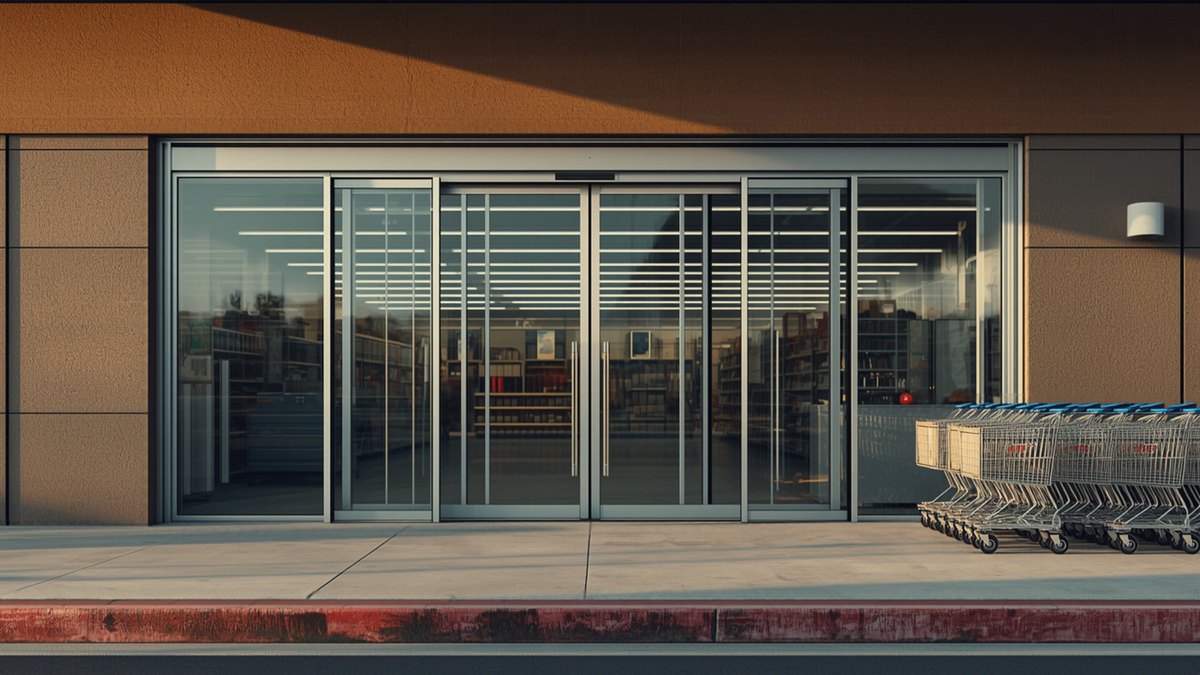
Few entrances work as hard as the front doors of a hardware or home improvement store. Customers push loaded flatbed carts through them, contractors roll in early and out late, and dust, sawdust and grit get tracked in all day. Automatic doors are a big help in that setting, but the same traffic that makes them useful also wears them down faster. Knowing what tends to go first helps store managers keep the entrance open and avoid a breakdown on a busy Saturday.
Why Hardware Store Entrances Wear Faster
Automatic doors are built for heavy use, but a hardware store adds a few things most storefronts don't see:
- Wide, heavy loads. Flatbed carts, lumber and long items can bump door panels, frames and sensors on the way through.
- Dust and grit. Sawdust, concrete dust and sand from parking lots end up in tracks and on sensor covers.
- Long hours. Early opening and steady traffic mean more cycles every day.
- Weather. Doors that sit open for long stretches during deliveries or peak hours let in heat, cold and rain.
What Tends to Fail First
In busy retail entrances, a few parts usually show wear before anything else. Rollers and carriers on sliding doors wear from constant motion, especially when grit gets into the track. Bottom guides take hits from carts. Sensors get knocked out of alignment or coated with dust, which can cause doors to open late, stay open, or close too soon. Weather seals and sweeps wear out and let drafts in. None of these happen overnight, but together they can make an entrance noisy, slow or unreliable.
Keeping Carts From Damaging the Doors
A little planning at the entrance goes a long way. Bollards or rails can protect door frames and keep carts from hitting panels. Cart corrals placed away from the door's path keep stray carts from rolling into the threshold. Wider entrances, such as bi-parting sliding doors, can make it easier for customers with big loads to get through without bumping the door.
Daily Habits That Help
- Sweep the threshold and track area at opening and closing.
- Wipe sensor covers when they look dusty or filmed over.
- Keep entry mats flat so they don't catch the door or confuse sensors.
- Watch for doors that hesitate, grind, or reopen for no reason, and report it early.
Anything beyond cleaning and observation, including sensor adjustment, speed or timing changes, or work on the operator, belongs with a certified AAADM technician. Those are safety-critical settings.
Holding the Doors Open for Deliveries
Many stores set doors to hold open during deliveries or rushes. That's what the mode settings are for, but leaving doors open for long stretches can wear seals, raise heating and cooling costs, and let dust deeper into the track. Using hold-open only when needed and returning the door to automatic afterward helps the whole system last longer.
Planning Maintenance Around Your Busy Season
Spring projects and weekend rushes are when you least want the front door down. Scheduling inspections and routine service ahead of busy seasons gives a technician time to replace worn rollers, clean tracks, check sensors and catch small problems before they shut down the entrance.
Hardware Store Door Service in Central Arkansas
CSC Automatic Doors keeps retail entrances working for businesses across central Arkansas, from hardware and home improvement stores to grocery and convenience stores. If your entrance is slow, noisy or acting up, call us at 501-514-4932.