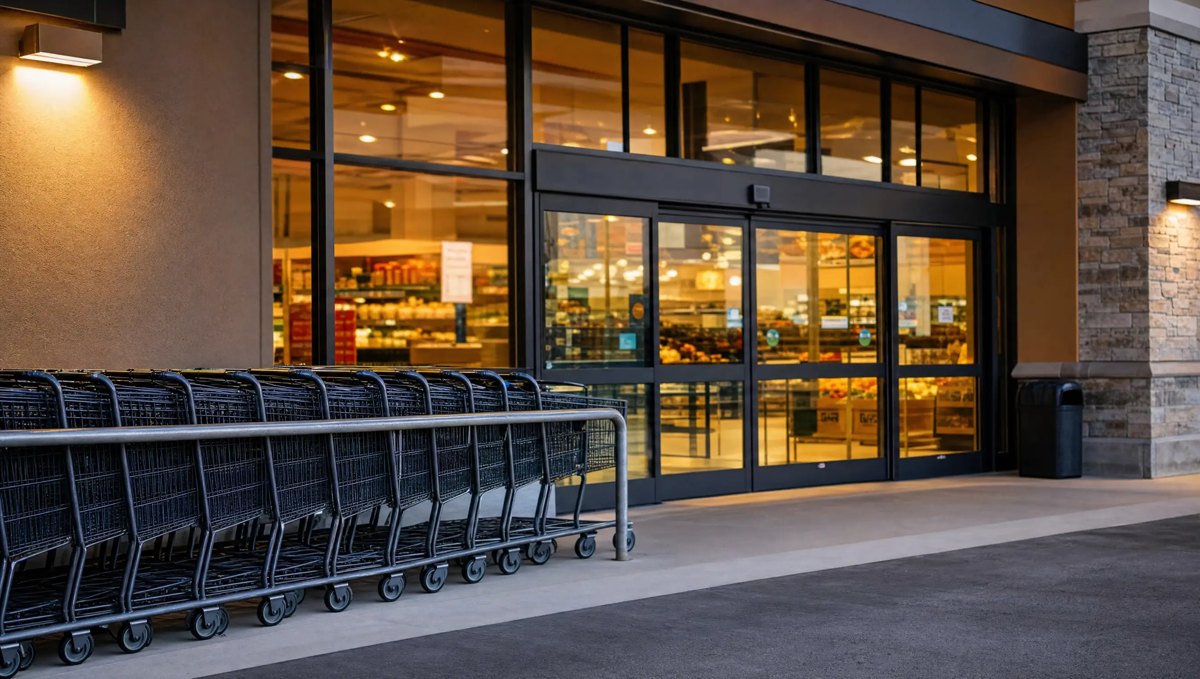
No commercial door in central Arkansas works harder than the one at a grocery store entrance. It cycles thousands of times a day, absorbs cart impacts, fights the weather every time it opens, and does it all while shoppers with full hands expect it to just work. When it stops, the problem lands at your busiest doorway during your busiest hours.
Constant Use Is Constant Wear
A grocery entrance is one of the highest-cycle door environments there is. Every open-and-close puts load on the operator motor, belts, rollers, and hinges. Parts that might last years on a low-traffic office door reach the end of their service life far faster here. That wear is predictable, which is exactly why it can be managed instead of waited on.
Common wear points on a busy grocery door include:
- Drive belts and gears inside the operator that stretch and fatigue from thousands of daily cycles
- Rollers and carriers that carry sliding panels and eventually bind or drag
- Bottom guides and thresholds packed with dirt, grit, and cart debris
- Sensors and safety beams knocked out of alignment by carts and foot traffic
Carts, Weather, and the Weak Seal
Shopping carts are hard on doors. A cart pushed into a panel, a corner clipped on the way out, a bumper worn from daily contact—all of it adds up to misalignment and stress the door was never meant to shrug off forever. Doors that don't close square start letting in more than shoppers.
That's where the weather seal matters. A grocery entrance that no longer seals tight bleeds conditioned air all day. In an Arkansas summer or a January cold snap, that's real money off your energy bill and a swing in comfort your customers feel the moment they walk in. Worn sweeps, gaps at the meeting point, and panels that don't fully retract or close all point to a seal that needs attention.
Uptime Is Sales
A propped-open or dead entrance door changes how a store operates. It slows the flow of shoppers, creates a bottleneck at the register-side exit, raises accessibility concerns for customers who rely on that door, and quietly signals that things aren't being kept up. During peak hours, that friction costs you. The door is part of the shopping experience whether you think of it that way or not.
Uptime isn't luck. It comes from catching wear before it becomes failure—the loose belt before it snaps, the drifting sensor before it stops detecting a shopper, the dragging roller before it seizes.
The Case for Maintenance
Scheduled maintenance is the cheapest insurance a high-traffic door has. A trained technician inspects the operator, checks and adjusts the drive components, cleans and clears the tracks, tests the sensors and safety systems, and verifies the door meets AAADM safety standards for opening force and timing. Small corrections during a planned visit are far less expensive than an emergency call when the door quits on a Saturday.
Automatic-door safety work is not a DIY job. Adjusting opening force, closing speed, hold-open timing, operators, sensors, or any electrical component should always be handled by a certified AAADM technician. A door that closes too hard or fails to detect a person isn't just a nuisance—it's a liability. Leave those adjustments to someone trained and equipped to set them correctly.
Built for the Long Haul
Commercial Service Company has served central Arkansas businesses since 1976. We know what grocery-grade traffic does to a door, and we know how to keep your entrance opening, closing, sealing, and selling—from Conway and Little Rock to Benton, Searcy, and Russellville.
Frequently asked questions
How often should grocery store automatic doors be serviced?
High-traffic grocery entrances cycle far more than most commercial doors, so they benefit from more frequent professional maintenance than a low-traffic door. A certified technician can recommend an interval based on your traffic and door type—call CSC at 501-548-2374 to set one up.
Why is my automatic door letting in outside air?
It usually means the weather seal is failing—worn sweeps, gaps where panels meet, or panels that no longer close fully square, often from cart impacts and daily wear. A technician can inspect the seal and realign the door to close tight again.
Can I adjust my automatic door's speed or force myself?
No. Opening force, closing speed, hold-open timing, sensors, and operators are safety-critical and must be adjusted by a certified AAADM technician. Incorrect settings can injure customers and create liability. Always leave these adjustments to a trained professional.