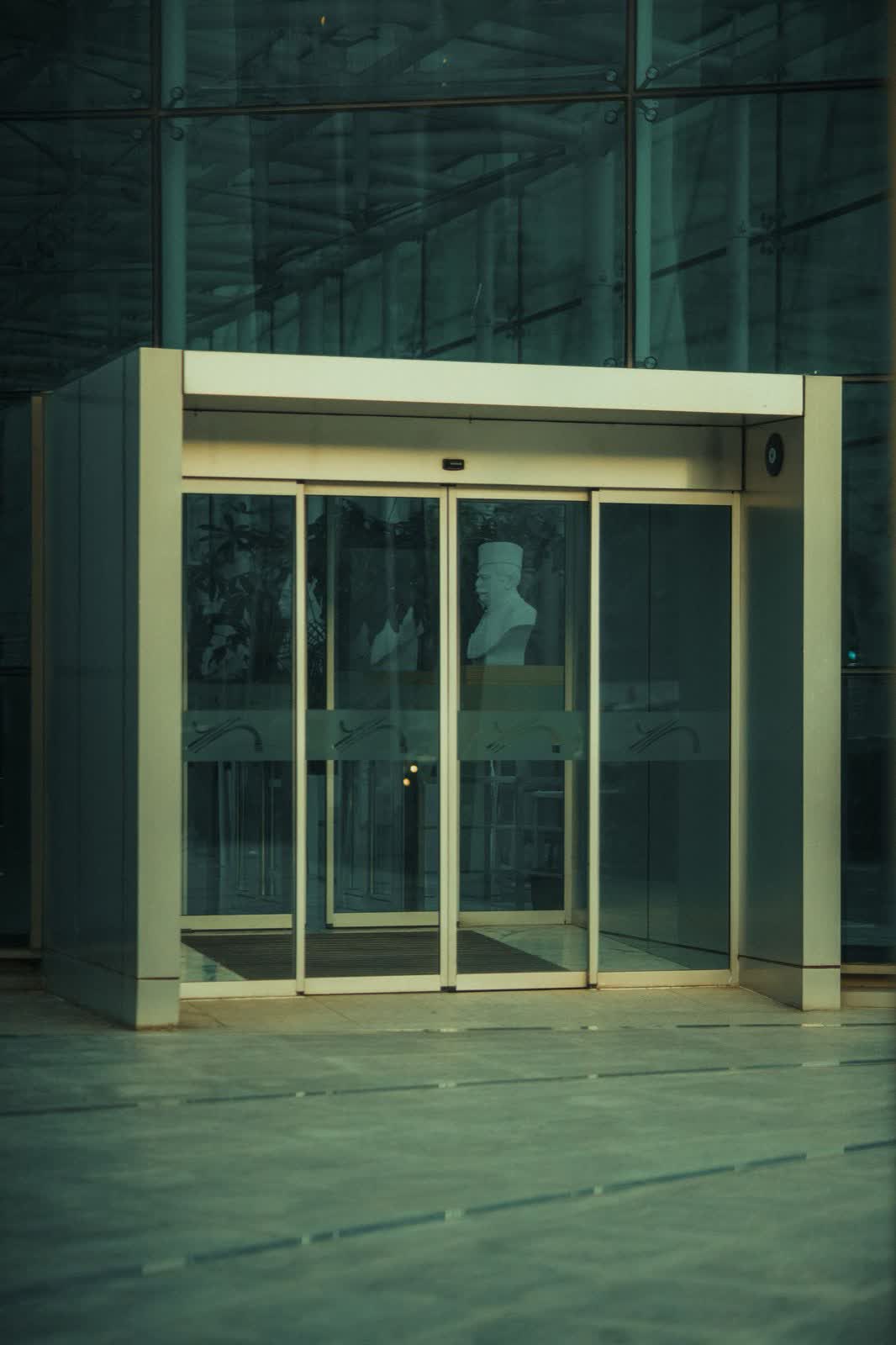
What "Maneuvering Space" Actually Means
Every accessible entrance needs a flat, unobstructed stretch of floor on both the approach side and the exit side of the door. That space lets someone using a wheelchair, a walker, or a rolling cart line up with the door, stop, and move through it without backing up, turning sideways, or squeezing past an obstacle. It sounds simple, but it is one of the most common trouble spots we find on service calls across central Arkansas.
The trouble is usually not the door itself — it is what is sitting in front of it.
The Usual Suspects
A few items show up again and again when we walk a site and look at entrance clearance:
- Mats and rugs that are too thick, curled at the edges, or placed too close to the door's swing path.
- Planters and seasonal displays set up for curb appeal that quietly narrow the walkway.
- Trash cans and ash urns parked right next to the entrance for convenience.
- Sale racks and sandwich board signs that creep closer to the door every time someone restocks or restages them.
- Stacked carts or pallets waiting to be moved, left just inside or outside the threshold.
Any one of these can turn a smooth entrance into a bottleneck. Combine two or three and a customer using a wheelchair or a parent pushing a stroller may not be able to get through at all without help.
Why a Swinging Door Makes This Worse
Manual swing doors need floor space for two things: the door's swing arc, and the person's reach to grab and pull the handle while stepping back out of the way. That reach-and-step maneuver eats up floor space fast, especially at a door people are also trying to hold open for whoever is behind them.
How an Automatic Operator Changes the Picture
Adding a low-energy automatic operator to an existing swing door, or installing a sliding automatic entrance, removes the reach-and-pull step entirely. A person approaching the door does not need to plant a wheelchair, cane, or cart and lean into a handle — the door opens on its own once it senses them. That frees up floor space that used to be reserved for that reach maneuver and makes the approach far more forgiving of a mat that is slightly out of place or a rack that is a little too close.
An automatic entrance does not eliminate the need for clear floor space, though. Sensors still need a clean line of sight to the approach zone, and the door still needs room to swing or slide without meeting a planter or a trash can halfway. Clutter that would have been a minor annoyance at a manual door can trip a sensor's field of view or block the door's path at an automatic one.
Keeping the Approach Zone Clear
Most of this comes down to routine housekeeping rather than anything technical:
- Walk the entrance from the outside in, at cart height and at wheelchair height, not just standing height.
- Keep seasonal displays, sale racks, and signage a step back from the door's swing or slide path.
- Choose low-pile mats that lie flat and do not bunch at the edges, and check them after cleaning crews come through.
- Give trash cans and planters a fixed spot well clear of the threshold rather than wherever fits.
- Train staff to notice when a delivery cart or stack of merchandise has landed in the approach zone, even temporarily.
When to Bring in a Technician
Housekeeping handles the clutter, but the door's own behavior is a different matter. If a sensor seems to trigger late, an operator opens too fast or too slow, or a door does not fully clear the opening before someone reaches it, that is a safety-critical setting that belongs to a certified AAADM technician with the right testing equipment, not something to adjust by trial and error. The same goes for threshold height, closing force, and hold-open timing on any automatic entrance.
CSC Automatic Doors has served central Arkansas businesses since Commercial Service Company opened its doors in 1976, working on entrances for facility, retail, healthcare, and hospitality locations across Little Rock, Conway, North Little Rock, Benton, Bryant, Maumelle, Jacksonville, Searcy, Russellville, Cabot, Sherwood, and Hot Springs. If you want a second set of eyes on your entrance clearance, or need an automatic operator inspected or adjusted, call us at 501-548-2374.
Frequently asked questions
How much clear floor space does an accessible entrance actually need?
It depends on the door type, its swing or slide direction, and how people approach it, so there is no single number that fits every site. Rather than guessing, have a technician walk your specific entrance and point out any tight spots.
Can a floor mat really cause a problem at the entrance?
Yes. A mat that is too thick, curled at the edges, or positioned too close to the door's path can catch a wheelchair caster, cane tip, or cart wheel and interrupt someone's approach.
Does adding an automatic operator solve maneuvering clearance on its own?
It removes the reach-and-pull step a manual door requires, which helps, but the floor space around the door still needs to stay clear so sensors have a clean view and the door has room to move.