
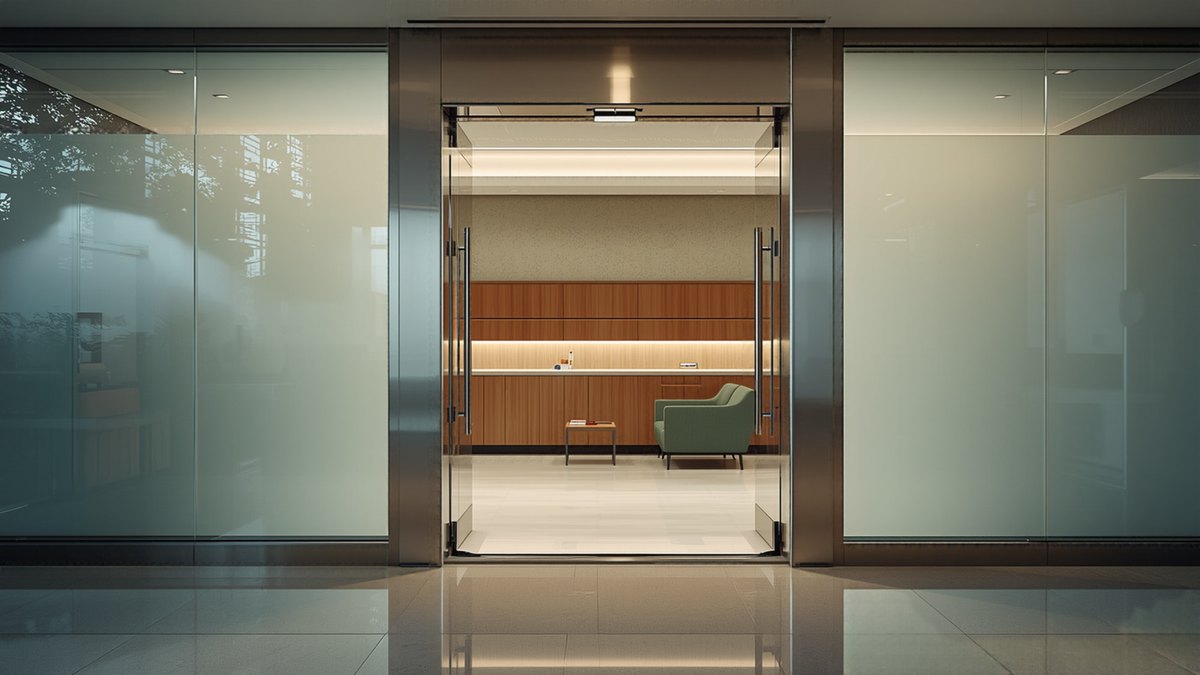
Dental and specialty medical offices see a steady flow of patients who are managing more than just an appointment — walkers, wheelchairs, canes, a diaper bag in one hand and a toddler in the other, or simply a mouth that's numb and hands that don't want to grip a handle. A heavy door at the front entrance adds friction to every one of those visits. An automatic door removes it, and for a practice that depends on a tight schedule, a reliable entrance matters as much as a reliable chair.
Why Entrances Matter More in Healthcare Settings
Patients walking into a dental or medical office aren't always at their best. Some are recovering from a procedure, some are anxious, some are managing chronic pain or mobility limits that make a standard door genuinely hard to use. A front entrance that opens on its own, without a shove or a struggle, sets the tone for the visit before the patient ever reaches the front desk. It also keeps staff from having to drop what they're doing to hold a door for someone coming in with a wheelchair or a rolling walker.
- Patients using wheelchairs, walkers, or canes can enter without needing a free hand for the door
- Parents and caregivers juggling kids, bags, or paperwork aren't stuck wrestling a handle
- Staff spend less time playing doorman during a busy morning schedule
- A smooth entrance experience reflects well on the practice from the first few seconds of a visit
Low-Energy Operators and Push Plates
Most dental and specialty medical offices don't need a high-traffic automatic door like a grocery store entrance — they need an entrance that opens smoothly and predictably a reasonable number of times a day. Low-energy swing operators paired with a wall-mounted push plate are a common fit for this kind of office. The patient (or a caregiver) presses the plate, and the door swings open at a controlled, gentle speed rather than snapping open the way some commercial units do.
This matters in a medical setting for a simple reason: a door that moves too quickly or forcefully near someone using a walker or wheelchair isn't just inconvenient, it's a real safety concern. Low-energy operators are built to move at a gentler pace and with less force than full-energy automatic doors, which fits the kind of foot traffic a dental or specialty office actually has.
Quiet Operation for Small Waiting Rooms
Dental and specialty offices often have a compact footprint — a waiting room that's close to the front door, with patients trying to fill out forms, take a call, or just sit quietly before an appointment. A door operator that whines, clunks, or hums loudly every time it cycles becomes background noise everyone in the room notices. Over time, a noisy operator gets more attention from patients (and more complaints to the front desk) than it should.
Smooth, quiet operation isn't a luxury feature here — it's part of keeping a small clinical space feeling calm. When an operator is maintained and adjusted properly, the door should open and close without drawing attention to itself.
One Entrance, One Point of Failure
Most dental and specialty medical offices run on a single front entrance. There's no back door for patients, no second lobby to route people through if the automatic door stops working. If that one entrance jams, won't close all the way, or stops responding to the push plate, it affects every patient on the schedule that day — not just a slow afternoon, but a fully booked one.
That's why a practice with one automatic entrance benefits from routine service rather than waiting for a breakdown. Hinges wear, sensors drift out of alignment, and operators age even with light use. Catching those issues on a maintenance visit is a lot less disruptive than discovering them when a patient is standing in front of a door that won't open.
Leave the Adjustments to a Certified Technician
An automatic door's force, timing, and sensor settings are not something office staff should try to tune on their own. These are safety-critical settings, and getting them right requires a certified AAADM technician with the proper testing equipment — not a screwdriver and a guess. If a door at your practice feels like it's closing too fast, opening too slowly, or not responding reliably to the push plate, that's a call for a technician, not a DIY fix.
CSC Automatic Doors has served central Arkansas businesses since 1976 through our parent company, Commercial Service Company, and we work on the kind of low-energy automatic entrances that fit dental and specialty medical offices throughout Conway, Little Rock, North Little Rock, Benton, Bryant, Maumelle, Jacksonville, Searcy, Russellville, Cabot, Sherwood, and Hot Springs.
If your practice's front entrance needs an inspection, adjustment, or a new low-energy operator installed, call CSC Automatic Doors at 501-514-4932. We'll get your entrance working the way your patients and your schedule need it to.
Frequently asked questions
What kind of automatic door is best for a small dental office entrance?
Most dental and specialty medical offices do well with a low-energy swing operator paired with a wall-mounted push plate. It opens at a controlled, gentle speed that fits patients using walkers or wheelchairs and a smaller, quieter office setting.
Can an automatic entrance be adjusted to open more slowly for patients with walkers?
Force and timing adjustments on an automatic door are a safety-critical setting, so they should only be handled by a certified AAADM technician with the right testing equipment. Call CSC and we'll evaluate the door's settings for you.
What should we do if our only front entrance stops working?
Call for service right away, since a single-entrance office doesn't have a backup door for patients. Routine maintenance visits also help catch worn hinges, misaligned sensors, or aging operator parts before they lead to a breakdown.