Why Churches Ask About Automatic Doors
Most churches and community buildings in central Arkansas were built for a congregation that walked in on its own. Decades later, the same doors are used by members in their eighties, people with walkers and wheelchairs, parents carrying car seats, and volunteers hauling folding tables in on a Saturday. A heavy door with a stiff closer is the most common barrier we see, and it is usually the one a longtime member stops mentioning and simply stops walking through.
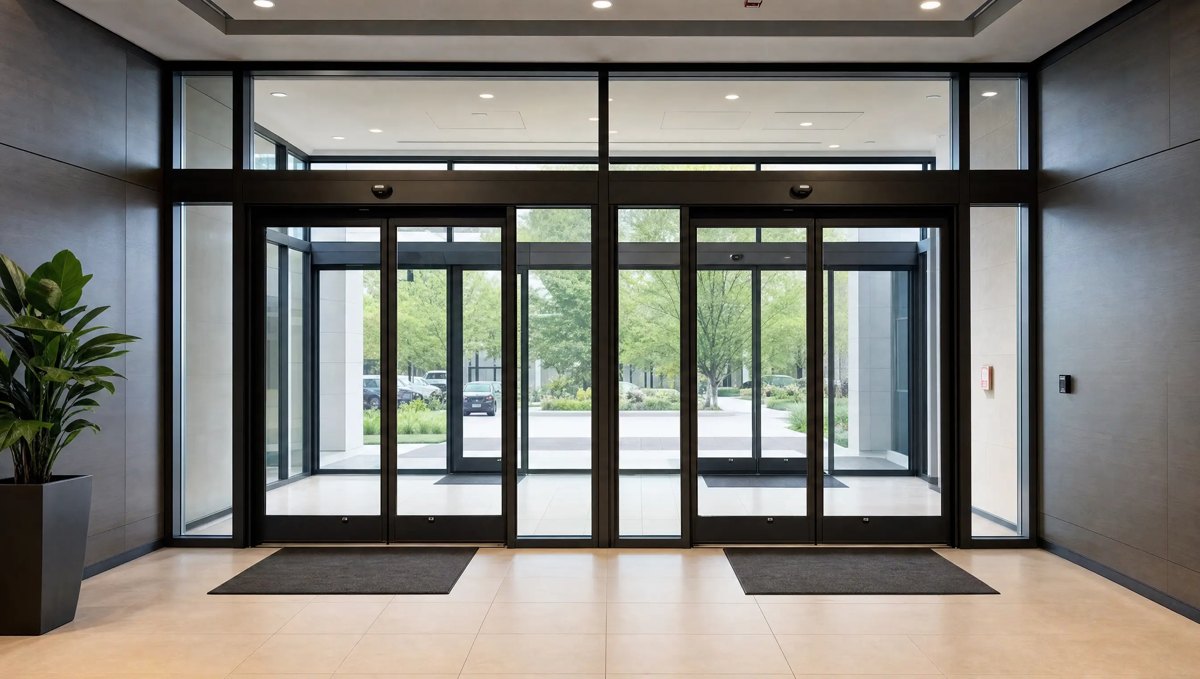
A church automatic door installation solves that quietly. The door opens when someone presses a plate or waves a hand, holds long enough for a slow walker, and closes gently. Nobody has to ask for help at the front of the building.
Start With the Entrance People Actually Use
Churches often have four or five ways in: sanctuary doors, a fellowship hall entrance, a side door near the parking lot, a kitchen door. The doors people photograph are rarely the doors people use. Before we quote anything, we walk the building with you and ask which entrance the congregation comes through on a normal Sunday, which one sits closest to accessible parking, and which one midweek groups and outside renters use.
In most buildings the answer is the side entrance by the lot, not the front. That is the door worth automating first.
Push Plate Placement Matters More Than the Door
A well-installed operator with a badly placed push plate still leaves people stuck. The plate has to be reachable from a seated position, far enough from the door swing that a wheelchair user is not sitting in the path of the door when it opens, and clearly visible against the wall behind it. Vestibules with two sets of doors need plates on both sides of both openings, positioned so someone can clear the first door and reach the second without turning around.
Common problems we correct in older buildings: plates hidden behind a coat rack or bulletin board, plates on the hinge side of a swing door, plates mounted at a comfortable height for whoever held the drill, and interior plates never installed at all, so people can get in but not out. Touchless wave sensors are worth considering for kitchens, restrooms, and nurseries where hands are full.
Phasing the Work When the Budget Is Tight
Very few churches approve a whole-building automation project in one vote. That is fine. This work phases well, and we would rather help you plan three years of it than oversell one year.
- Phase one: the primary accessible entrance nearest accessible parking, with interior and exterior push plates.
- Phase two: the second door of the vestibule, so the entry works as a complete path rather than half a solution.
- Phase three: the fellowship hall or secondary entrance used by weekday groups, community meals, and outside renters.
- Ongoing: scheduled inspections on the operators already installed, so phase one still works correctly by the time phase three is funded.
Existing doors can often be retrofitted with a low-energy operator instead of replaced, which usually costs less than a full new entrance. Whether that works depends on the frame, the door weight, and where power can be run. We tell you which one you are looking at before you take a number to the board.
Safety Checks When There Is No Facilities Staff
Schools and hospitals have maintenance departments. Most churches have a volunteer with a toolbox and good intentions. That changes what we hand you.
Volunteers can do the daily walk safely: watch a full open-and-close cycle, confirm the door is not slamming or stalling, check that every push plate responds, keep sensor faces and the threshold clean, look for cracked glass or loose hardware, and clear anything stacked in the door path after an event.
What volunteers should never touch is anything that changes how the door behaves: opening and closing speed, hold-open time, closing force, sensor aiming, operator settings, or wiring. Those adjustments keep the door from striking someone, and they belong to an AAADM-certified technician with the right test equipment. If a door closes hard, opens on its own, hesitates, or has had a sensor bumped by a ladder, take it out of service and call us.
What Installation Day Looks Like
We schedule around your calendar. That usually means a Monday through Thursday install so the entrance is finished and tested well before Sunday, and working around funerals, weddings, food pantry hours, and daycare drop-off. We run the electrical, mount the operator and plates, cycle and test the door, and walk your volunteers through the daily check before we leave.
Commercial Service Company has served central Arkansas since 1976, and CSC Automatic Doors works with churches and community buildings in Conway, Little Rock, North Little Rock, Benton, Bryant, Maumelle, Jacksonville, Searcy, Russellville, Cabot, Sherwood, and Hot Springs. If your congregation is talking about accessible entry and wants a straight answer on what it takes and how to phase it, call CSC at 501-548-2374.
Frequently asked questions
Can an existing church door be automated, or does it have to be replaced?
In many cases an existing door can be retrofitted with a low-energy operator and push plates instead of being replaced, which typically costs less than a whole new entrance. It depends on the condition and weight of the door, the frame, and whether power can be run to the header. We look at the actual opening and tell you which option applies before you present a number to your board.
Where should the push plates go so they work for everyone?
Plates should be reachable from a seated position, set to the side of the door swing so a wheelchair user is not in the path when the door opens, and visible against the wall. Vestibules need plates on both sides of both doors so the whole entry works as one path. We place them during the walkthrough rather than guessing from a floor plan.
We have no maintenance staff. What can our volunteers safely check themselves?
Volunteers can watch a full open-and-close cycle, confirm the push plates respond, keep sensor faces and the threshold clean, look for loose hardware or cracked glass, and keep the door path clear after events. They should never adjust speed, hold-open time, closing force, sensors, or wiring. If the door is behaving differently, take it out of service and call an AAADM-certified technician at 501-548-2374.