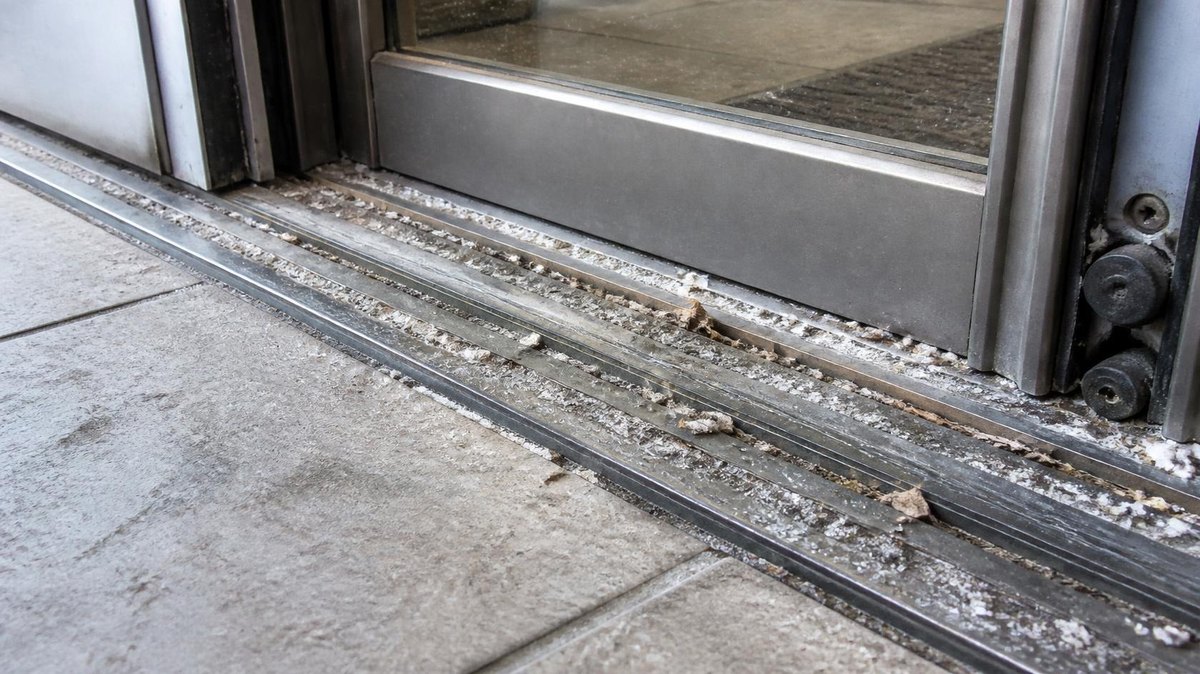
Almost every sliding door failure we get called out for in Conway, Little Rock and North Little Rock has a slow, boring backstory. Nobody broke anything. Nobody ran a pallet jack into the panel. The track just filled up with grit over a couple of seasons, and the door quietly ground itself to death while everyone walked through it twice a day.
Track cleaning is the least glamorous item on any maintenance list and the one that saves the most money. Here is what happens in there, what your own people can handle, and where the line is.
What Ends Up in a Sliding Door Track
The bottom track sits at floor level, exactly where every shoe, cart wheel and gust of wind drops its cargo. In central Arkansas we pull the same short list out of tracks all year:
- Parking lot grit, sand and gravel dust tracked in on shoes and cart wheels
- Ice melt and rock salt in winter, which is abrasive going in and corrosive once it gets damp
- Mulch, pine straw, seed pods and leaves in spring and fall
- Paper scraps, receipts, straw wrappers and zip ties in retail and restaurant entrances
- Mop water, floor wax and cleaner residue that dries into a paste and holds everything else in place
Top-hung sliders carry their weight on rollers in the header, but the bottom guides still need a clean channel. Once it packs, the panel fights the track on every cycle.
How a Dirty Track Kills the Whole Door
The damage moves in a predictable order, and every step costs more than the one before it.
- Debris in the guide channel adds drag. The panel does not glide, it scrapes.
- Rollers and guides wear flat, pick up grit in the bearings, and start to squeal, chatter or grind.
- The belt takes up the extra load. Belts stretch, teeth round off, and the door starts stopping short, bouncing, or reversing for no visible reason.
- The operator works harder every cycle to move a panel that should be nearly effortless. Motors and gearboxes are the most expensive part of the door.
- Alignment drifts as parts wear. Panels bind, drag on the threshold, or stop sealing at the meeting point, which invites sensor faults and weather problems.
By the time an entrance is loud enough that a manager calls about the noise, the cheap-fix window has usually closed. Cleaning keeps you at the roller end of that list instead of the operator end.
What Your Staff Can Safely Do
Track cleaning is housekeeping, not door service, as long as nobody opens a cover or touches an adjustment. Give it to whoever does your nightly close:
- Sweep or vacuum the bottom track daily in high-traffic entrances, weekly everywhere else. A shop vacuum with a crevice tool is the right tool.
- Pull out anything wedged in the channel by hand: gravel, zip ties, bottle caps, wads of paper.
- Wipe out salt residue with a damp cloth during winter, then dry it. Salt left sitting will pit metal.
- Keep mop water and wax out of the track. Mop up to it, not into it.
- Leave the track dry. Do not spray oil, grease or silicone in there, because lubricant turns loose dust into a paste that packs the channel solid.
- Report changes. If the door gets louder, slower, jerky, or starts hesitating, write it down and call it in while it is still a small repair.
That is the whole list. Nobody on staff should pry at rollers, remove header covers, loosen panel hardware or adjust anything, and no one should work on a door that is still powered and cycling.
What Needs a Technician
Everything above the floor belongs to an AAADM-certified tech, because the parts that move the door decide how safely it opens and closes:
- Roller, guide and carrier inspection or replacement, and the header cleaning that goes with it
- Belt tension, belt replacement and drive pulley wear
- Panel alignment, hanger adjustment and threshold or bottom guide work
- Opening and closing speed, hold-open time and force settings
- Sensor aim, testing and any operator or electrical work
Those settings decide whether the door stops for a person standing in the opening. We test them with instruments on a maintenance visit rather than adjusting by feel.
Build It Into the Schedule
The pattern across grocery, clinic, hotel and retail entrances is simple. Sites that put a two-minute track sweep on the closing checklist, and let us handle the mechanical side on a schedule, replace rollers occasionally. Sites that do neither replace operators.
If your entrance is grinding, dragging or just has not been looked at since the last hard winter, call CSC Automatic Doors at 501-548-2374. We have served central Arkansas businesses since 1976, and we cover Conway, Little Rock, North Little Rock, Benton, Bryant, Maumelle, Jacksonville, Searcy, Russellville, Cabot, Sherwood and Hot Springs.
Frequently asked questions
How often should an automatic sliding door track be cleaned?
It depends on traffic and what is on the ground outside. A grocery or hospital entrance with a busy parking lot usually needs a quick sweep or vacuum every night, while a quiet office lobby may do fine weekly. The honest test is to look: if you can see grit, salt or debris sitting in the channel, it is already doing damage and should be cleaned now.
Should I lubricate my automatic door track?
No. A bottom track is meant to run dry. Oil, grease and silicone sprays collect dust and turn it into a packed paste that is far harder on rollers and guides than plain grit was. The rollers, bearings and drive components that do need lubrication are inside the header, and that is technician work on a maintenance visit, not something to spray from the floor.
My sliding door is grinding. Is cleaning the track going to fix it?
Sometimes, if you catch it early and the noise is just debris in the channel. More often, grinding means the rollers or belt have already worn from running dirty, and cleaning alone will not bring the door back. Have it looked at rather than waiting, because a worn roller or a stretched belt is a much smaller bill than the operator it will eventually take out. Call us at 501-548-2374.