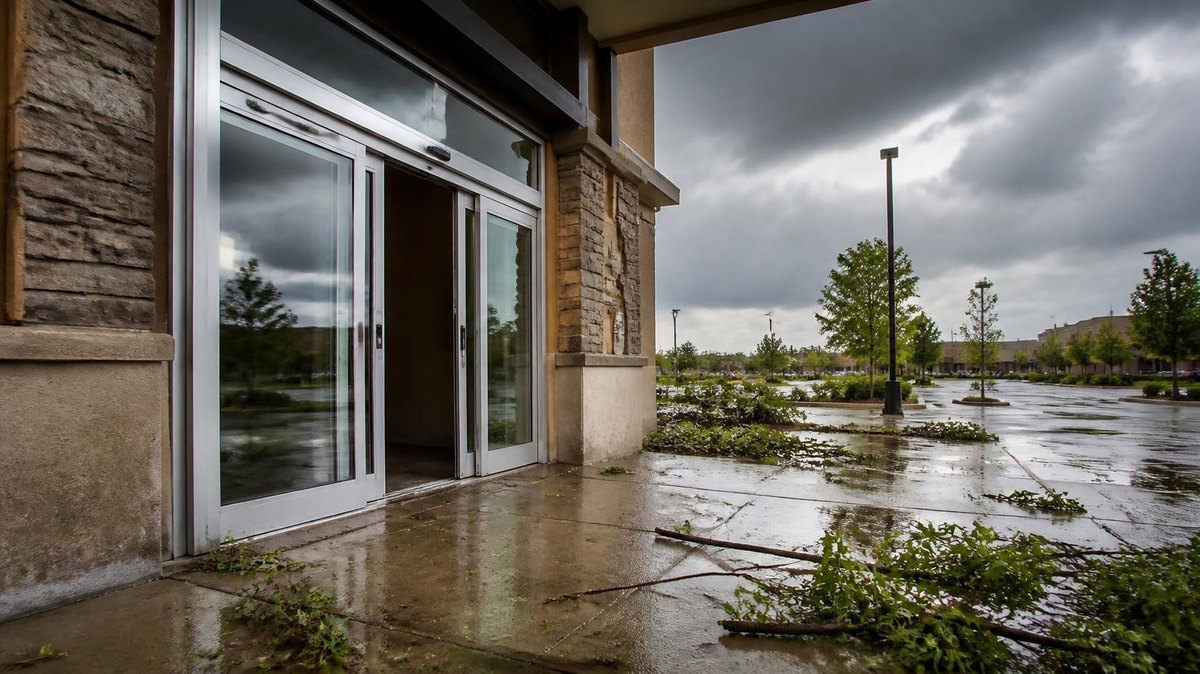
Arkansas Storms Don't Spare Your Front Entrance
Central Arkansas gets hit hard every spring and fall — straight-line winds, hail, and the occasional tornado warning that sends debris across a parking lot. Automatic doors take the brunt of it: glass panels, sensor headers, and operator housings built for daily traffic, not flying debris or a gust that catches a door mid-swing. If your automatic entrance took a hit in the last storm, here's what to do first.
Secure the Opening First
Before anything else, get the opening safe and closed off. A damaged automatic door is a security gap, a weather gap, and a liability risk all at once.
- If the door won't close or lock, prop it shut manually or block the opening with a cart, plywood, or sandbags until it can be secured properly.
- Cover broken glass with plywood or a heavy tarp, screwed or taped down so wind can't peel it back.
- Cut power to the operator at the breaker if wiring, the header, or sensors were exposed to water or visible damage. Don't leave a damaged automatic door running on its own.
- Rope or cone off the area so employees and customers don't walk through broken glass or a door that could swing unexpectedly.
- If the frame is bent or pulled from the wall, don't force the door open or closed — that can cause more structural damage.
Document for Insurance Before You Touch Anything Else
Once the opening is secure, document the damage before repair work starts. Insurance adjusters want to see the storm's actual impact, not a cleaned-up version.
- Photograph the door from several angles — wide shots of the whole entrance and close-ups of cracked glass, bent frames, dented headers, or water inside the operator housing.
- Note the date and time of the storm, and keep any weather alerts or local news reports confirming high winds or hail that day.
- Write down the door's condition before the storm so the adjuster can see this is storm damage, not wear and tear.
- Keep debris that caused the damage — a limb, sign, or roofing piece — as evidence if it's safe to do so.
- Get a written repair estimate from a qualified automatic door company before repairs begin; most insurers want documentation before work is done, not after.
What's Repairable vs. What Needs Full Replacement
Not every storm-damaged automatic door needs to be torn out. A certified technician can usually tell you which category you're in during the first visit.
- Often repairable: cracked or shattered glass panels when the surrounding frame is still square; damaged weatherstripping, seals, or gaskets; sensor covers or headers that are cosmetically damaged but still functioning; bent kick plates or push bars that don't affect structural alignment.
- Usually points toward replacement: a bent or pulled-loose frame or header no longer sitting square in the opening; water intrusion that's caused visible corrosion or electrical damage; structural movement in the wall or transom the door mounts to; an aging operator or control board no longer supported with parts.
Either way, this is a call for someone who inspects automatic doors for a living, not a guess based on how the damage looks from across the lobby.
Running Safely on a Temporary Basis
If your business can't close while repairs are scheduled, there are safe ways to keep the entrance usable — but they have limits.
- A door that's structurally sound but has a broken sensor or minor cosmetic damage can sometimes be switched to manual operation temporarily, with the automatic operator disabled, rather than left running with reduced sensing.
- Never run an automatic door on power if a safety sensor is damaged, disconnected, or throwing an error — that sensor is what keeps the door from closing on someone.
- If glass is missing or boarded, treat that opening as closed to automatic traffic and direct people to a working entrance.
- Any decision about force settings, timing, or bypassing a safety feature to keep a door "working" short-term should go through a certified technician, not staff on-site. AAADM-certified inspection exists because a misadjusted automatic door is a real injury risk.
Bring in a Certified Technician
Automatic door operators, sensors, and force/timing settings are safety-critical systems. After storm damage, don't attempt to reset, rewire, or readjust any of it yourself, even if the fix looks simple. A technician needs to confirm the header is still square, the operator wasn't compromised by water, and every sensor is calibrated correctly before the door goes back into full automatic service.
CSC Automatic Doors has served central Arkansas businesses since 1976, and we know storm season here — from hail in Conway to straight-line winds through Little Rock and North Little Rock. If your automatic door took storm damage, call us at 501-548-2374 for an inspection. We'll tell you straight whether it's a repair or a replacement, and help get your entrance safe and documented for your insurance claim.
Frequently asked questions
Can I keep using our automatic door after storm damage until a technician arrives?
Only if it's safe to do so. If any sensor is damaged, disconnected, or throwing an error, don't run it on automatic power — switch it to manual swing operation or block the opening instead. A door with cracked but intact glass and no sensor issues can often keep working until your appointment.
Will my insurance cover a storm-damaged automatic door?
Most commercial property policies cover wind and hail damage, but coverage details vary by carrier and policy. Document the damage thoroughly with photos and a written repair estimate before work starts, and check your specific policy or ask your agent about your deductible and claim process.
How do I know if my automatic door needs AAADM certified service versus a general contractor?
Anything involving the operator, sensors, or force and timing settings should go to an AAADM-certified automatic door technician, not a general contractor or handyman. Those systems are safety-critical, and a misadjusted door can cause real injuries.