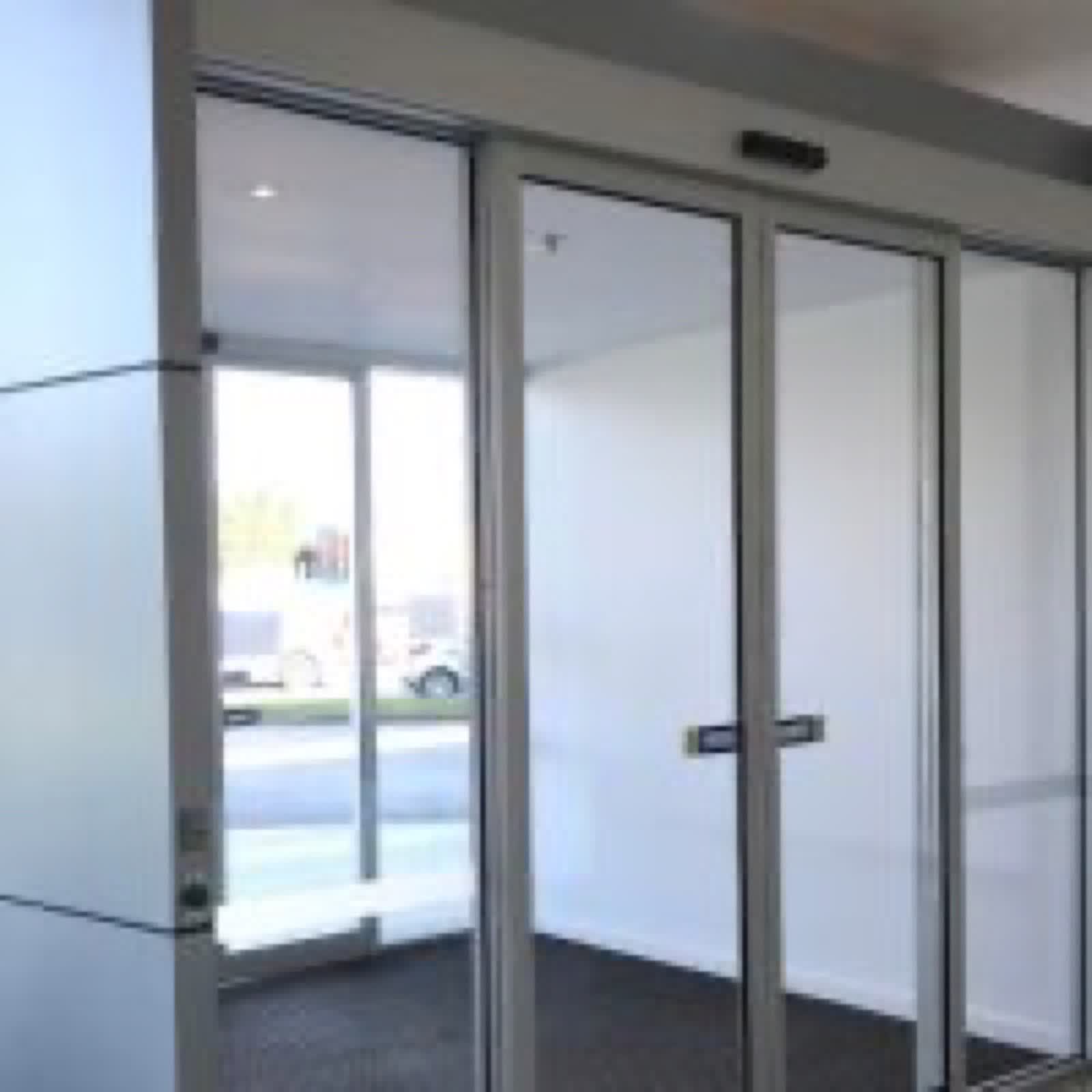
An automatic door that opens for no one, or worse, closes on a customer, is not a quirk you can live with. It is a sign the sensors that run the door are dirty, misaligned, or failing. For a retail entrance, a clinic lobby, or a hotel front door, that means wasted energy, frustrated visitors, and a real liability risk. Here is how automatic door sensors work, what goes wrong, and why sensor repair is a job for a certified technician.
Two Kinds of Sensors, Two Different Jobs
Most commercial automatic doors rely on two distinct sensor systems, and understanding the difference explains most of the problems owners see.
- Motion (activation) sensors sit above the door and tell it when to open. They watch a zone in front of the entrance and trigger the operator when someone approaches.
- Presence and safety sensors keep the door from closing on a person or object standing in the doorway. These are the safety-critical devices that hold the door open until the path is clear.
When a door misbehaves, the fault usually lands in one of these two systems. Knowing which one helps a technician diagnose it fast, but the two are wired to work together, so a problem in one can look like a problem in the other.
When the Door Opens for Nothing
A door that cycles open and shut with no one around is more than annoying. In an Arkansas summer, every phantom opening dumps your cooled air onto the sidewalk and drives up energy costs. Common causes include a motion sensor aimed too wide, picking up passing traffic or blowing debris; reflective floors or nearby glass bouncing the signal back; or a sensor knocked out of alignment by cleaning, deliveries, or a bump from a cart. Rain, moving shadows, and even a flapping mat can also fool an activation sensor that has drifted out of spec.
When the Door Does Not See People
The opposite failure is more serious. A door that hesitates or ignores an approaching customer usually has a dirty, blocked, or degraded activation sensor. Dust, fingerprints, spider webs, and grime build up on the lens over months and slowly shrink the detection zone. Cold weather, condensation, and aging components reduce sensitivity further. When a presence or safety sensor fails, the door may start to close while someone is still in the threshold. That is not a convenience issue. It is a safety hazard, and it means the door is no longer meeting the standard it was installed to.
Dirty, Misaligned, or Aging Sensors
Three culprits account for most sensor trouble. Dirt is the simplest: lenses and emitters collect film that a quick wipe will not fully clear. Misalignment happens gradually, as vibration, impacts, and repeated adjustments push the sensor off its intended angle. Age is the quiet one. Sensors and their wiring degrade over years of daily cycling, and an older unit may need recalibration or replacement rather than a cleaning. Because these problems overlap, a door that acts up rarely has a single obvious cause.
Why Sensor Work Belongs to a Certified Technician
It is tempting to treat a sensor as a simple wipe-and-go fix, but automatic door sensors are tied directly to how the door opens, holds, and closes around people. Adjusting detection zones, recalibrating safety sensors, and setting closing force and timing are safety-critical tasks governed by industry standards. Get them wrong and you either leave a door that still endangers people or create a new hazard. A certified AAADM technician can test the full system, confirm the door meets code, and document that it is operating safely. This is not DIY territory. If your door is opening for nothing, missing people, or closing too soon, have it inspected by a professional rather than adjusting it yourself.
CSC Automatic Doors has served central Arkansas businesses since 1976, with certified technicians covering Little Rock, Conway, North Little Rock, Benton, Bryant, and the surrounding area. If your automatic door is not behaving, call us at 501-548-2374 and we will get it diagnosed and back to working safely.
Frequently asked questions
Why does my automatic door open when no one is there?
Usually the motion sensor is aimed too wide or is misaligned, so it picks up passing traffic, reflections off glossy floors or glass, moving shadows, or debris. A technician can retune the detection zone so the door only opens for real approaching customers.
Can I clean or adjust the sensor myself?
You can gently keep the lens free of obvious dust, but adjusting detection zones, alignment, safety sensors, and closing force and timing are safety-critical tasks that should be done by a certified AAADM technician. Improper adjustment can leave the door dangerous or out of code.
How do I know if it is a safety-sensor problem?
If the door starts to close while someone is still in the doorway, or does not hold open for people passing through, the presence or safety sensor is likely failing. This is a hazard and should be inspected right away by a certified technician at 501-548-2374.