
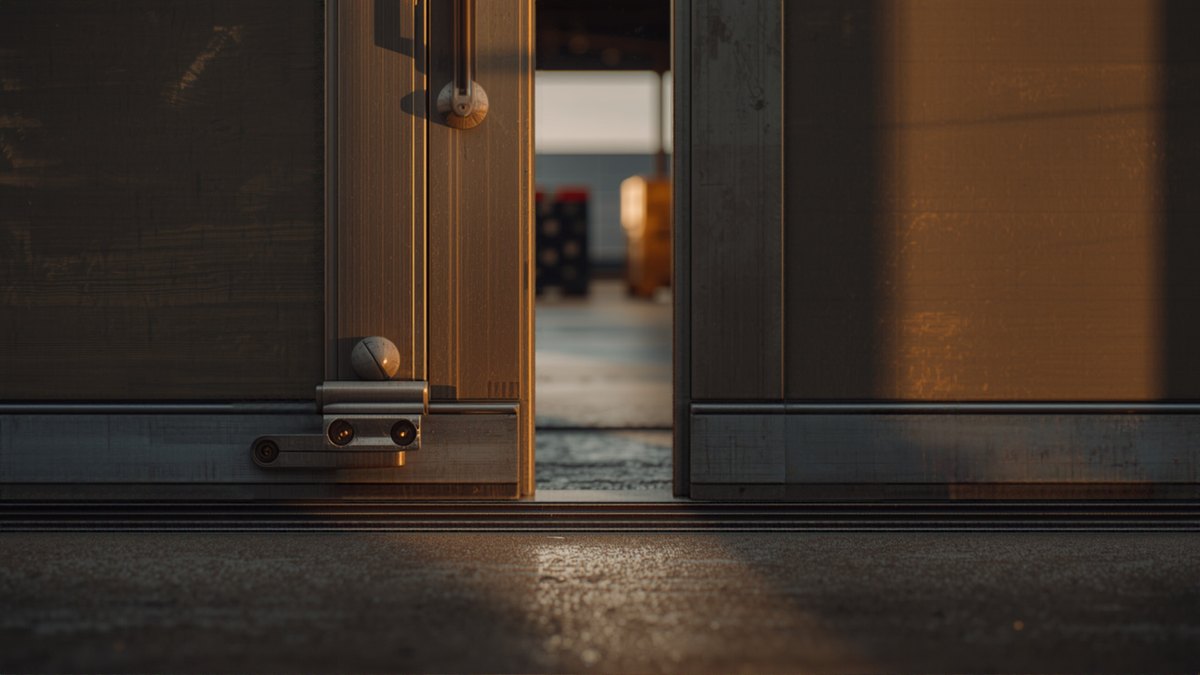
Walk up to a lot of commercial bi-parting entrances and you'll see it: the two panels slide open and closed, but they don't quite line up. One stops short, leaving a gap down the middle. Or they overlap and bind slightly before settling. Either way, the door isn't sealing the way it should, and that's more than a cosmetic issue for a business in central Arkansas, where summer heat and winter cold both make an entrance work for its living.
Here's what's usually behind panels that won't meet properly, and why it's worth getting looked at sooner rather than later.
Belt Slippage
Most sliding operators move the panels using a belt connected to a drive system. Over thousands of open-close cycles, that belt can stretch, glaze, or slip on its pulley. When it slips even slightly, the operator's internal position tracking no longer matches where the panel actually is. The door closes based on what the operator thinks is happening, not what's really happening on the track — so one panel consistently stops a little early or a little late.
Clamp Issues
The panels are attached to the belt (or drive cable) using clamps. If a clamp has loosened, corroded, or shifted position over time, the panel it holds can drift out of sync with its partner panel. This often shows up gradually — the gap gets a little wider month over month until someone finally notices the door "doesn't close all the way anymore."
Stops Out of Adjustment
Bi-parting doors rely on mechanical or electronic stops to tell each panel where to halt in the closed position. When these stops are out of adjustment, panels can stop short of center, overlap, or close unevenly from one side to the other. Stop adjustment is a safety-critical setting tied to the manufacturer's limits for force and travel — it's not something to guess at with a wrench. This kind of adjustment belongs to a certified AAADM technician with the proper testing equipment, since getting it wrong can affect how the door senses resistance and reacts to someone standing in the opening.
Floor Guides Doing Their Job — or Not
Floor guides and bottom tracks keep the panels running true as they slide. Debris, wear, or a guide that's knocked out of position can let a panel wander slightly off its intended path. Even a small deviation at floor level can translate into a visible gap or overlap up at eye level, especially on wider bi-parting units common at retail and healthcare entrances.
Why a Gap Matters More Than It Looks
A sliding door that doesn't fully close isn't just an eyesore. Consider what you're paying for every day it stays that way:
- Drafts: A gap down the middle lets conditioned air escape and outside air pour in — your HVAC system works harder to compensate, every hour the doors are supposed to be closed.
- Security: An entrance that doesn't fully seal at night or during closed hours is a gap a facility manager shouldn't have to explain after the fact. Panels that stop short can leave an opening large enough to matter.
- Energy costs: For retail, healthcare, and hospitality locations running HVAC around the clock, a door that never fully seals is a slow, steady drain that shows up on the utility bill month after month.
- Wear on the rest of the system: A door straining against stops or guides that are out of adjustment puts extra load on the belt, motor, and track — which can turn a small adjustment issue into a bigger repair down the line.
None of these causes are something to chase down with trial and error. Diagnosing whether it's belt slippage, a clamp, stop adjustment, or a floor guide takes hands-on inspection of the operator and track — and correcting it, especially anything involving stops, force, or timing, needs to be done by someone trained on the specific operator and equipped with the right testing tools.
Get It Looked At
CSC Automatic Doors has served businesses across central Arkansas since 1976, and bi-parting panels that won't meet is one of the most common calls we get from retail, healthcare, and hospitality facilities from Little Rock to Conway, Benton to Searcy. If your sliding doors are leaving a gap, overlapping, or just don't feel right when they close, give us a call at 501-514-4932 and we'll get a technician out to diagnose it properly.
","faqs":[["Why did my sliding doors suddenly start leaving a gap when they close?","It's usually gradual wear catching up all at once — belt slippage, a loosening clamp, or a floor guide drifting out of position. A small misalignment can go unnoticed for weeks until it becomes obvious."],["Can I just adjust the stops myself to close the gap?","No. Stop adjustment affects how the door senses resistance and controls panel travel, which is a safety-critical setting. It should be handled by a certified AAADM technician with the proper testing equipment, not adjusted by facility staff."],["Will a gap between panels actually affect my energy bill?","Yes. An entrance that doesn't fully seal lets conditioned air escape and outside air in every time the HVAC system is running, which means your system works harder and longer to maintain temperature."]]