If you own or manage a building in central Arkansas, the automatic door out front does more work than almost anything else on the property. So when someone asks how long an operator lasts, the honest answer is: it depends less on age than on how hard the door works. A door at a slow-traffic office ages very differently from one at a busy clinic or grocery entrance. Here is how to think about lifespan realistically, and how to get the most out of the equipment you already own.
Cycle Counts Matter More Than Years
An automatic door operator is rated by cycles, not by calendar age. One cycle is a full open-and-close. A door that runs a few hundred cycles a day will outlive one running several thousand a day, even if both were installed the same week. That is why a retail entrance in Little Rock and a back-office door in Conway can carry identical hardware yet reach end-of-life years apart.
Think of it the way you would vehicle mileage. The number on the odometer tells you more than the year on the title. Traffic volume, door weight, weather exposure, and how often the door is forced or blocked all add up to the real wear on the motor, gearbox, belts, and control board. A quality commercial operator that is maintained well can serve reliably for many years; the same unit neglected in a high-traffic entrance can wear out far sooner.
Wear Signs to Watch For
Operators rarely fail without warning. They tell you they are tiring first. Train your staff to report these signs early:
- Hesitation: a pause or stutter before the door starts moving, or a slow, labored opening that used to be smooth.
- Noise: new grinding, squealing, clicking, or a motor that sounds like it is straining. Sound changes are one of the earliest signals of internal wear.
- Drift and misalignment: a door that no longer closes fully, sags, drags, or drifts open and shut on its own.
- Timing problems: doors closing too fast, too slow, or catching people who are still in the opening.
- Intermittent operation: the door works, then does not, then works again — often a sign of a failing control board or connection.
Any of these are worth a service call. Force, speed, and timing adjustments are safety-critical and governed by industry standards, so leave them to a certified AAADM-trained technician rather than adjusting anything yourself. A door that shuts too hard or too fast is a liability, not just an inconvenience.
How Maintenance Stretches Life
The single biggest factor you control is maintenance. Regular service catches small problems before they cascade — a worn belt replaced on schedule protects the motor and gearbox behind it; sensors cleaned and verified keep the door from cycling on false triggers and burning cycles for no reason. A technician also checks the safety functions on every visit, which keeps the door both reliable and compliant.
Doors that get scheduled preventive maintenance simply last longer and fail less. The cost of a maintenance visit is small next to an emergency breakdown at your busiest hour, and consistent service is the cheapest way to push an operator toward the long end of its lifespan instead of the short end.
Replace the Operator, or the Whole Door?
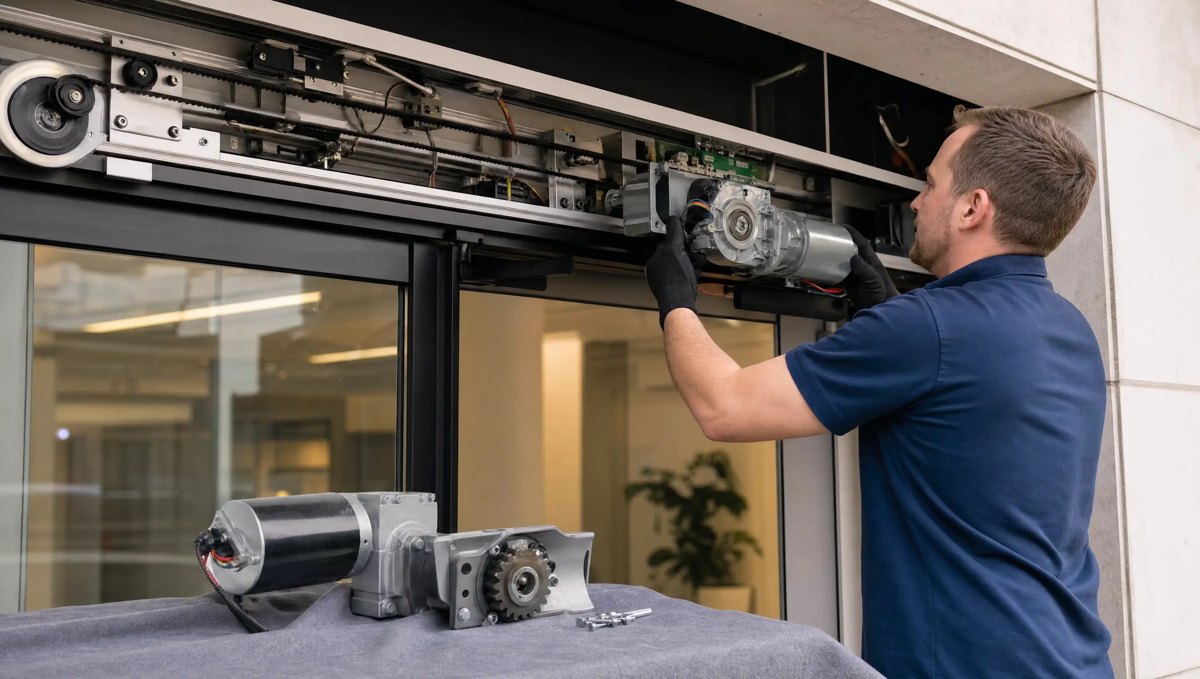
When an operator finally reaches the end, you usually do not have to replace the entire entrance. In many cases the door panels, frame, and glass are still sound and only the operator needs to be swapped out — a far smaller project than a full door replacement. Whether that is the right call depends on the age and condition of the surrounding hardware, whether parts for your model are still available, and how the rest of the entrance has held up.
Sometimes a full replacement makes more sense — for example, when the frame is damaged, the door no longer meets current accessibility requirements, or repeated repairs are adding up. A technician can inspect the whole entrance and tell you honestly which path costs you less over time. There is no single right answer; there is only the right answer for your specific door.
Not Sure Where Your Door Stands?
If your automatic door is hesitating, making new noises, or simply getting old, the CSC Automatic Doors team can inspect it, tell you how much life is left, and lay out your options plainly. Commercial Service Company has served central Arkansas since 1976. Call us at 501-548-2374 and we'll take a look.
Frequently asked questions
How many years should an automatic door operator last?
There is no fixed number — lifespan is measured in cycles, not years. A well-maintained commercial operator can run reliably for many years at a low-traffic door, while a high-traffic entrance running thousands of cycles a day will wear the same equipment out faster. Traffic volume and maintenance matter more than age.
What are the first signs my automatic door operator is wearing out?
Watch for hesitation or a slow, labored opening, new grinding or squealing noises, a door that drifts or won't close fully, and intermittent operation. These usually appear before a full failure, so reporting them early lets a technician fix a small problem before it becomes an emergency.
Can I just replace the operator instead of the whole door?
Often, yes. If the panels, frame, and glass are still in good shape, a technician can replace only the operator, which is a smaller job than a full door replacement. A full replacement makes more sense when the frame is damaged, parts are unavailable, or the entrance no longer meets accessibility standards. An inspection tells you which is right for your door.