A commercial automatic door tells you it is in trouble long before it quits, and it does it with sound. The grind on the last few inches of travel, the squeal on a cold morning, the thump in the header — that is wear reporting itself. Doors rarely fail all at once. They get louder first, and the buildings that listen pay for a roller kit instead of an operator.
What a Healthy Door Sounds Like
A properly adjusted slider or swing door is quiet and even: a soft hum from the header and steady travel with no change in pitch or effort from one end to the other. It should sound the same on the tenth cycle of the day as on the thousandth. When the noise changes — new, louder, or only in one spot — something has moved, worn, or dried out.
Grinding: Rollers, Bearings, and Track
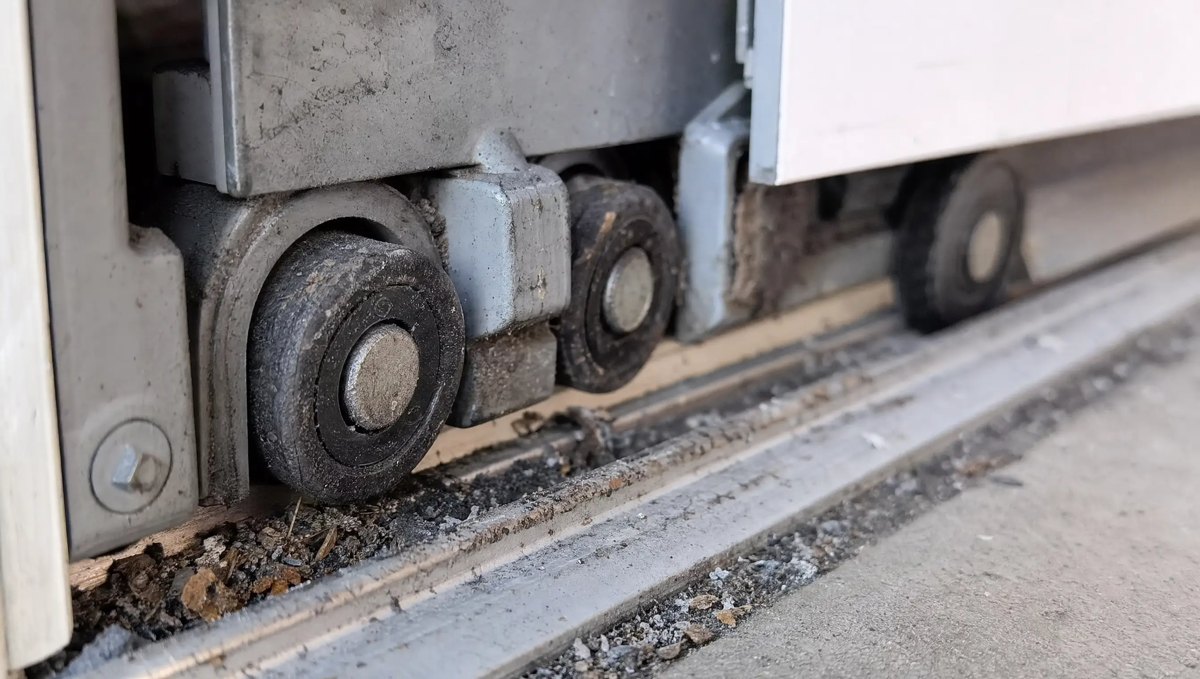
Grinding is the most common complaint we hear. On a sliding entrance, the panel hangs from rollers that ride a track inside the header, and those rollers carry the full weight of the glass thousands of times a day. As the bearings wear, a roller stops spinning freely and starts dragging, and you hear grit and metal instead of a smooth roll.
A dirty track does the same damage from the outside in. Central Arkansas gives entrances a hard year: pollen, summer dust and grass clippings, road grit and salt tracked in over winter. That debris packs into the track and bottom guides and works like sandpaper. A door that grinds and shudders as it travels is telling you the rolling surface is no longer clean and true.
Squealing and Chirping
A high squeal or repeating chirp means friction where there should be almost none — a dry bearing, a swing-door pivot running without lubrication, or a guide binding on a panel that has drifted out of alignment. Cold weather makes it obvious first, which is why these calls spike at the first hard snap of the season. It is easy to ignore because the door still works. It works because something is being ground away to keep it working.
Thumping, Clunking, and Slapping
Rhythmic thumping or slapping in the header often points to the drive belt. Belts stretch with age and cycle count. A loose belt slaps the pulley, slips under load, and lets the door hesitate, lurch, or stop short of a full close — and slipping confuses the operator's sense of where the door actually is, which is when you see doors reverse for no reason or refuse to latch into position. Clunking at the end of travel can also mean a worn stop or fasteners backing out from vibration.
Humming, Buzzing, and Straining
A motor that hums louder than it used to, buzzes, or sounds like it is straining is working harder than it should. Sometimes the cause is mechanical — a dragging panel forcing the motor to compensate — and sometimes it is the operator itself. Either way, that is header work. Force settings, timing, sensors, and anything electrical on an automatic door are safety-critical and belong to a certified AAADM technician, not to maintenance staff.
Why Waiting Turns a Small Fix Into a Big One
Here is the pattern we see over and over. A door grinds for months. Nobody calls, because it still opens. Worn rollers let the panel sag out of alignment, and misalignment makes the motor pull harder on every cycle. That extra load cooks the belt and bearings and eventually the gearbox and control board. What began as a roller and track service becomes an operator replacement, usually on the worst possible day.
There is a safety cost too. A door that drags, hesitates, or closes unevenly may no longer be within spec on closing force and reversing behavior — a real liability exposure for any business with public traffic, and exactly what an annual AAADM inspection is meant to catch.
What to Do When You Hear It
- Write down when the noise happens — opening, closing, at one end of travel, only when cold, or all the time.
- Note whether the door's behavior changed with it: slower travel, hesitation, reversing, or not closing fully.
- Keep the threshold and floor track swept clear of grit, leaves, and salt as part of normal cleaning.
- Do not spray lubricant into the track or header — the wrong product collects dirt and can make wear worse.
- Do not adjust force, speed, timing, or sensors, and do not open the header. That work is for a certified technician.
- If the door is grinding hard, hesitating, or reversing on its own, take it out of automatic service and call for repair.
CSC Automatic Doors has served central Arkansas businesses since 1976, and we service entrances in Conway, Little Rock, North Little Rock, Benton, Bryant, Maumelle, Jacksonville, Searcy, Russellville, Cabot, Sherwood, and Hot Springs. If your door has started making a noise it did not used to make, call us at 501-548-2374 and let us look at it while it is still a small repair.
Frequently asked questions
Why is my automatic door making a grinding noise?
Grinding usually comes from worn rollers or bearings, or from a track packed with dirt, grit and salt. As rollers wear they drag instead of rolling, and the debris acts like sandpaper on the rolling surfaces. Caught early it is typically a roller and track service; ignored, the panel sags out of alignment and the added load starts damaging the belt, gearbox and operator.
Is it safe to keep using an automatic door that is making noise?
It depends on how the door is behaving. A door that is grinding hard, hesitating, closing unevenly or reversing on its own may no longer meet its required closing force and reversing behavior, which is a safety and liability issue in any building with public traffic. In that case, take it out of automatic service and have a certified AAADM technician inspect it.
Can I lubricate or adjust the door myself to stop the noise?
No. Keeping the threshold and floor track swept clean is fine, but do not spray lubricant into the track or header - the wrong product attracts dirt and accelerates wear. Force, speed, timing, sensors, operators and electrical work on automatic doors are safety-critical and must be handled by a certified AAADM technician.