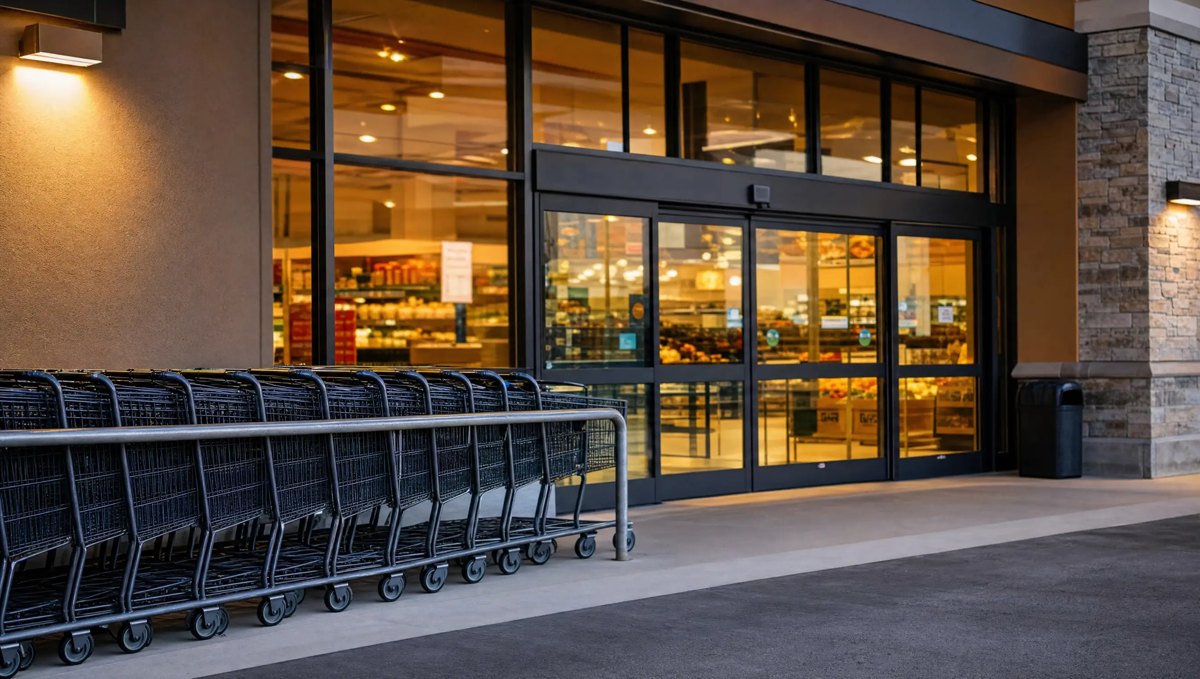
Every time an automatic door opens and closes, that's one cycle. A grocery store entrance in Conway might see that happen hundreds of times before lunch. A back-office door at the same property might see it a handful of times a day. Both are "automatic doors," but they are aging at completely different speeds — and treating them on the same maintenance calendar is how facilities end up with surprise breakdowns.
What a Cycle Actually Measures
A cycle counter, when a door operator has one, tracks total open-close events over the life of the unit. It's a better wear indicator than the calendar date the door was installed, because two identical doors installed on the same day can have wildly different histories depending on where they sit. Motors, belts, rollers, and sensors all wear based on use, not age — a door that's opened a lot simply works harder, more often, than one that mostly sits idle.
Why a Grocery Entrance and a Back Door Wear So Differently
Think about the difference in daily demand between a few types of entrances:
- Grocery, pharmacy, and healthcare entrances — constant foot traffic, carts, wheelchairs, and often dual sliding panels running most of the business day.
- Retail and hospitality main entrances — heavy during peak hours, lighter overnight, but still far more use than an interior door.
- Office, warehouse, or back-of-house doors — opened by staff and occasional deliveries, sometimes only a few dozen times a day.
The high-traffic entrance is putting far more wear on its rollers, belts, and sensors in a single week than the back door sees in a month. Weather exposure, dust, and how often carts or pallet jacks bump the door add to that wear on top of raw cycle count.
How Cycle Counts Should Drive Your Service Schedule
A maintenance interval based purely on "every six months" or "once a year" treats every door the same regardless of how hard it's working. A better approach ties service frequency to actual use:
- High-cycle entrances (grocery, healthcare, busy retail) benefit from more frequent inspections, since components reach their wear limits sooner.
- Moderate-traffic entrances can usually run on a standard seasonal schedule.
- Low-cycle interior or back doors can often go longer between visits, but shouldn't be forgotten entirely — infrequent use can let dust, debris, or a slow sensor drift go unnoticed.
A certified AAADM technician can pull cycle data from operators that track it, or estimate use from your hours and foot traffic, and use that to set a realistic interval instead of guessing.
Building a Schedule That Matches Your Traffic
The goal isn't more service visits — it's the right number of visits at the right time. A practical way to think about it property-wide:
- Walk your entrances and rank them by how busy they actually are, not just by square footage or location.
- Flag any entrance that runs constantly, sees carts or heavy equipment, or sits near an exterior exposed to weather — these usually need the tightest interval.
- Let a technician confirm the plan based on what they find during inspection, not just how the door looks from the lobby.
Force, closing speed, and sensor timing are safety-critical settings and should only be adjusted by a certified AAADM technician with the right testing equipment — not something to eyeball based on how the door "feels" day to day.
Signs a High-Traffic Door Is Overdue
Between scheduled visits, watch for a door that hesitates before opening, closes harder or softer than it used to, makes new noise, or doesn't fully seal at the accessible entrance. On a high-cycle door, those symptoms show up faster and matter more, since a component already near the end of its service life has less room to slip before it fails outright.
If you're not sure how hard your entrances are actually working, or it's been a while since anyone looked at cycle counts and wear together, CSC Automatic Doors can walk your property, flag the doors carrying the heaviest load, and set a schedule that matches real traffic instead of a generic calendar. Call us at 501-548-2374 to get a technician out to your Conway, Little Rock, or central Arkansas location.
Frequently asked questions
What exactly counts as a "cycle" on an automatic door?
One cycle is a single open-and-close event — the door opening for a person or cart and then returning to its closed position. Operators that track cycles log this total over the life of the unit, which gives a much clearer picture of actual wear than the door's install date alone.
Does a higher cycle count mean the door needs to be replaced sooner?
Not automatically, but it does mean components like rollers, belts, and the operator itself are working harder and reaching their wear limits faster. A high-cycle door isn't doomed — it just needs closer, more frequent attention so worn parts get caught and addressed before they cause a breakdown.
How often should a busy entrance be serviced compared to a low-traffic door?
There's no single number that fits every property — it depends on actual use, exposure to weather, and what a technician finds during inspection. In general, a high-traffic entrance like a grocery or healthcare door needs a tighter service interval than an interior or back-of-house door that only opens a handful of times a day. A certified AAADM technician can look at your specific traffic and set a realistic schedule rather than applying a one-size-fits-all calendar.