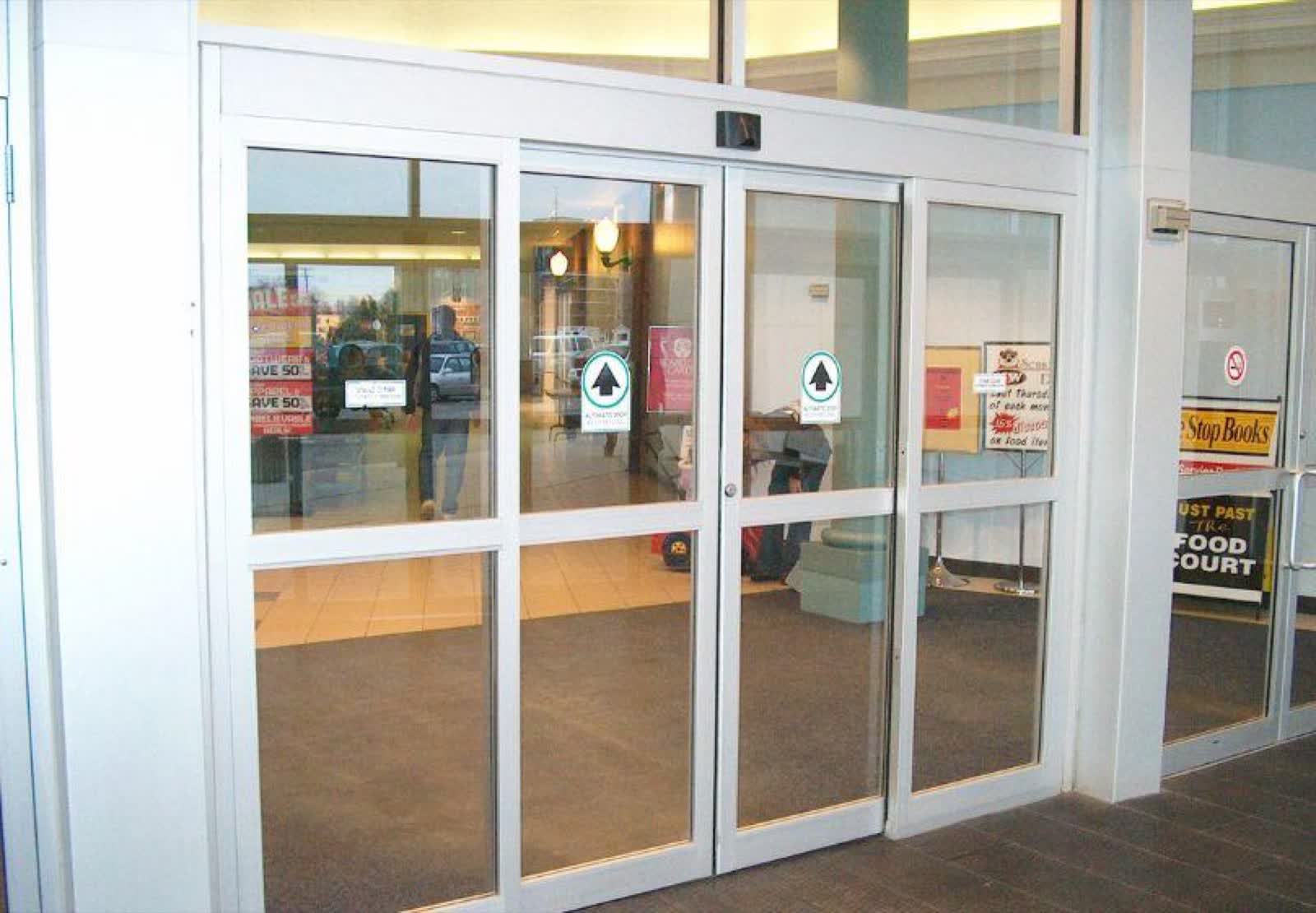
Most commercial sliding entrances aren't just glass on a track. Built into the sliding panel, and often the adjacent sidelite, is a break-out panel — a section designed to swing outward on hinges when someone pushes on it. It's there for the moment the power is out, the operator has failed, or people just need to get out fast and the doors aren't opening on their own. A break-out panel turns a sealed glass entrance into a manual exit in seconds, but only if it actually moves the way it's supposed to.
Why the Panel Is Supposed to Swing Freely
Under normal operation, a sliding door glides open and closed on its track and the break-out panel just rides along as part of the door leaf. It's only in an emergency that anyone relies on it swinging outward under hand pressure. That means a break-out panel can look completely fine day after day — sliding smoothly, closing tight — while the hinge side underneath is stiff, painted over, or seized. The panel's real job only shows up when someone actually needs it, which is exactly why it can't be judged by how the door looks in daily use.
How a Stiff or Stuck Break-Out Hurts Egress
If a break-out panel won't swing on the first push, or takes real force to move, it stops doing the one thing it exists for. In a crowd, a stuck panel means people bottleneck at an exit that's supposed to be open to them. In a fire or power outage, it means someone assuming they have an exit and finding out the hard way that they don't. A break-out panel that's a little stiff isn't a minor cosmetic flaw — it's an exit that quietly stopped working while everything else about the door looked normal.
What Causes a Break-Out Panel to Bind
Break-out hardware is simple, but it's also exposed to everything the entrance sees. Common causes of binding include:
- Dirt, grit, and grease buildup inside the hinge or pivot points from years of foot traffic
- Paint, caulk, or sealant applied over the hinge during a remodel or repaint, without anyone realizing what it was covering
- Weatherstripping or gasket material swelling or shifting and pressing against the panel edge
- A frame or track that's shifted slightly out of alignment, putting pressure on the panel where there shouldn't be any
- Corrosion on hinge pins, especially on entrances exposed to humidity, salt air treatment, or heavy cleaning chemicals
- A break-out switch or magnetic hold that's been adjusted too tight, holding the panel more firmly than intended
None of these show up on a walk-by inspection. A door can slide, open, and close perfectly and still have a break-out panel that won't budge under hand pressure.
Why the Reset Belongs to a Trained Technician
It's tempting to think a stuck panel just needs a shot of lubricant or a firm push to loosen it up. The problem is that break-out hardware is tied directly into the door's safety-critical settings — the tension that holds the panel closed during normal use has to be balanced against how easily it releases under pressure in an emergency. Adjusting that balance without the right testing equipment can leave a panel too loose for daily security or, worse, still too stiff to serve as an exit. This is calibration work that belongs to a certified AAADM technician, not a maintenance fix or a facilities team project. A tech can test the actual release force against the manufacturer's limits, clean and re-hang the hinge correctly, and confirm the panel performs the way it's meant to under real pressure, not just by feel.
Signs Your Break-Out Panel Needs a Look
Have a technician check the panel if you notice any of the following: the panel feels stiff or resistant when tested by hand, it doesn't return flush and latch cleanly after being pushed, it's been painted, caulked, or sealed around during other building work, the door frame nearby has been bumped, adjusted, or realigned, or it's simply never been tested since installation. Facilities, retail, healthcare, and hospitality entrances all take a lot of daily wear on these hinges, and a panel that worked fine at installation can bind up years later without any obvious warning sign.
If a break-out panel on your sliding entrance feels stiff, sticks, or you're just not sure it's been tested lately, CSC Automatic Doors can take a look. Call us at 501-548-2374 to get an AAADM-certified technician out to check it.
Frequently asked questions
What is a break-out panel on a sliding door?
It's a hinged section of a sliding entrance panel, or its sidelite, designed to swing outward under hand pressure so people have a manual way out if the door isn't operating normally.
Can I test my break-out panel myself?
You can gently check that a panel moves under hand pressure, but any adjustment to how easily it releases is a safety-critical setting that should be handled by a certified AAADM technician with the right testing equipment, not adjusted on your own.
How often should a break-out panel be checked?
Because it can look fine in daily sliding operation while the hinge underneath is stiff or seized, it's worth having a technician test it whenever nearby glazing, framing, or paint work is done, and periodically as part of routine door service.